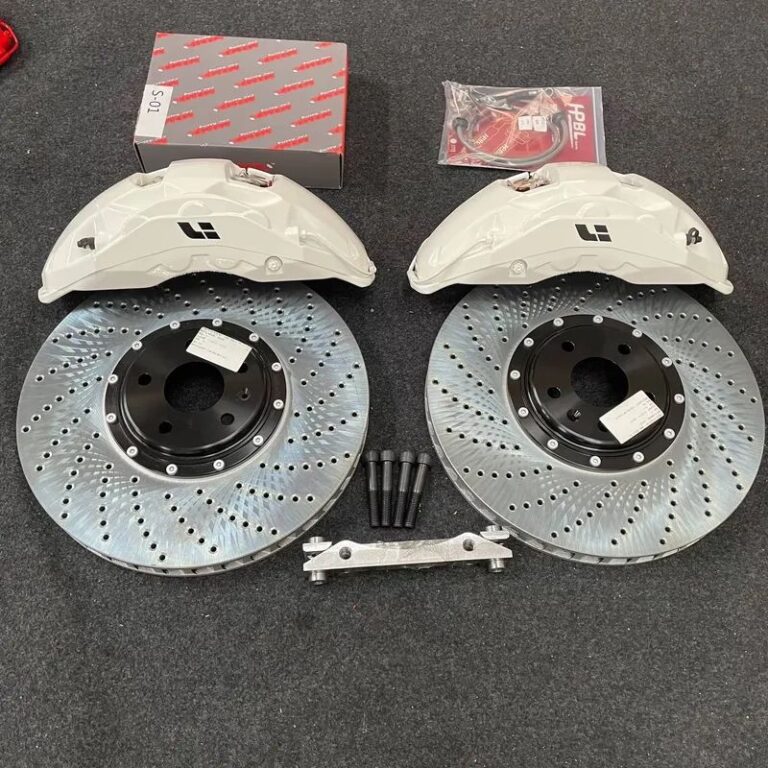
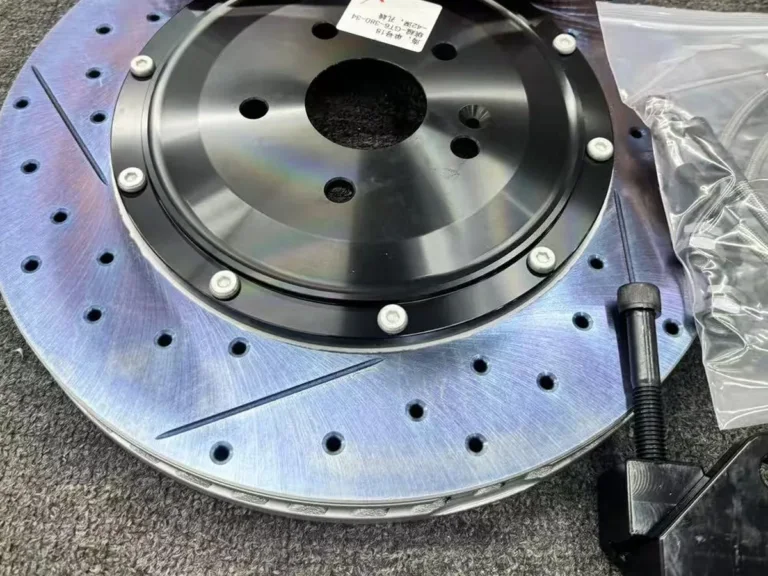
Which photos make a brake-kit review easier?
Useful brake kit fitment photos show the wheel markings, the back of the spokes, the inner barrel, the current caliper and rotor, and the nearby hose or suspension parts. Take each view straight, well lit and in focus, then send the photos with the vehicle and wheel measurements.
A photo does not replace a physical clearance measurement or a kit-specific wheel template. It helps the reviewer understand what must be measured next.
- One wheel-face photo.
- One inner-barrel photo.
- One spoke-back photo.
- One caliper and rotor photo.
- One wheel-marking photo.
- One hose and suspension-area photo.
Brake kit fitment photos: what each shot should prove
| Photo | What it shows | What it cannot prove |
|---|---|---|
| Wheel face | Wheel style, visible size and general spoke layout | Clearance behind the spokes or inside the barrel |
| Inner barrel | The inside wall that must clear the caliper and rotor | A measured minimum gap without a scale or template |
| Spoke backs | The path between the caliper face and wheel spokes | Suspension-travel clearance |
| Caliper and rotor | Current components, corrosion, adapters and visible markings | Rotor thickness or exact diameter |
| Wheel marking | Size, width, ET and J stamped on the wheel | Whether a listing copied the wrong value |
| Hose area | Routing, fittings and nearby suspension parts | Clearance through full lock and suspension travel |
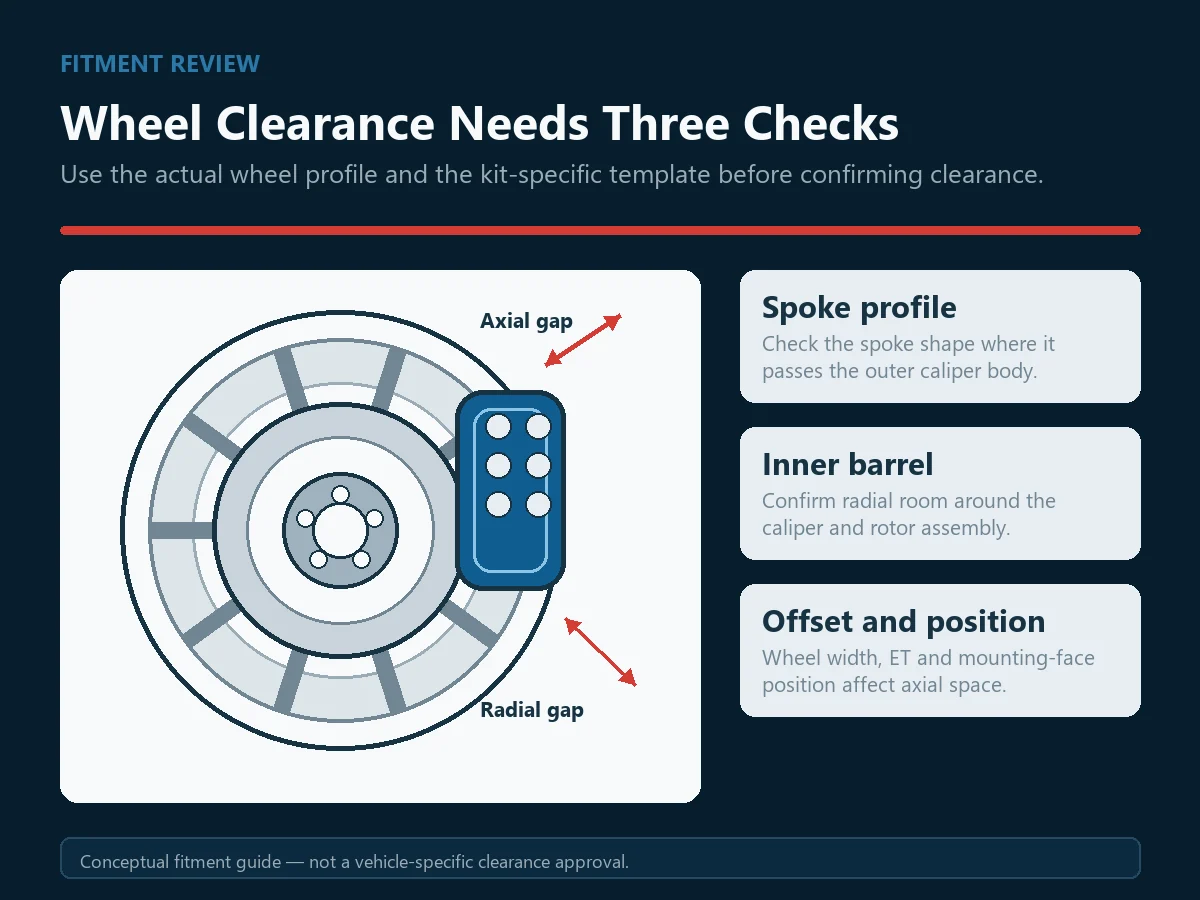
Shoot the wheel where the decision happens
A front-on wheel photo is useful for identification. The review needs the inner side of the wheel as well: spoke backs, barrel shape, any balance weights and the available space around the current brake.
Place a light behind the wheel if the arch is dark. Keep the phone roughly square to the target so the rim and caliper do not look distorted.
AI-assisted conceptual illustration, reviewed by SteedLux Parts. Nominal wheel diameter alone cannot confirm caliper clearance.
Photograph the three wheel identifiers together
Ask the buyer to photograph the wheel markings in a clean, readable image. The important values are the nominal diameter, the wheel width, the ET or offset, and the J marking. For aftermarket wheels, add the brand and model.
Size
Record the nominal wheel diameter. Treat it as a starting condition, not a clearance result.
Width and J
Capture the full width and bead-profile marking rather than only the first number.
ET or offset
Use the number on the wheel. Do not estimate offset from how far the wheel sits under the arch.
If the marking is dirty or painted over, clean it and retake the photo. A copied sales-listing value is not the same as a photograph of the wheel fitted to the car.
Show the caliper, rotor and mounting area
Photograph the complete current caliper from the front and from the wheel side. Include the area where the adapter or original mounting points sit, but keep hands and tools away from the brake line.
Add a scale to the rotor photo when possible. Record diameter, friction-ring thickness and hat height separately. A close-up can show a marking or a corrosion pattern, but it cannot replace the measurement record.
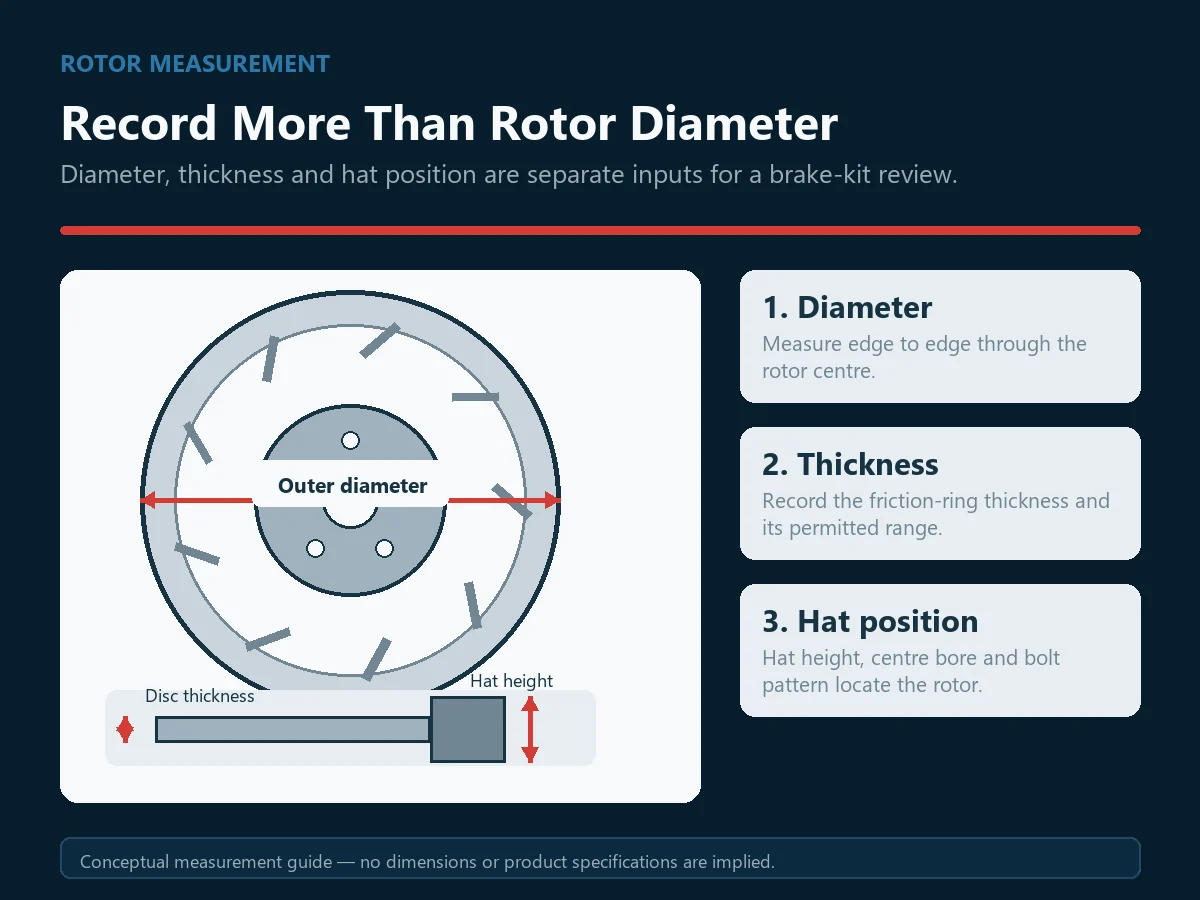
Put a measurable record beside the picture
The photo should show which surface was measured. The written record should say the tool used, the reading and whether wear, lips or grooves affected it.
AI-assisted conceptual illustration, reviewed by SteedLux Parts. No product dimensions or vehicle fitment are implied.
Seven photo mistakes that slow down a quote
- Showing only the wheel face and not the inner barrel.
- Using a dark photo where the caliper edge disappears.
- Cropping out the wheel-size, ET or J markings.
- Sending a rotor photo without a scale or written dimension.
- Hiding spacers, hub adapters or changed suspension parts.
- Measuring only one spoke and assuming the rest are equal.
- Sending photos without the VIN, model year and axle scope.
When photos are not enough
A photograph can show that a gap exists in one position. It cannot prove the smallest gap through steering travel, suspension movement or manufacturing variation.
A wheel-clearance template is more reliable when the proposed caliper body and rotor offset are being checked against the actual wheel. If the wheel has concave spokes, a changed hub or a spacer, the physical template review becomes more important.
For the complete measurement method, use the existing big brake kit measurement checklist. This article owns the photo-pack step; the measurement guide owns the detailed dimensions.
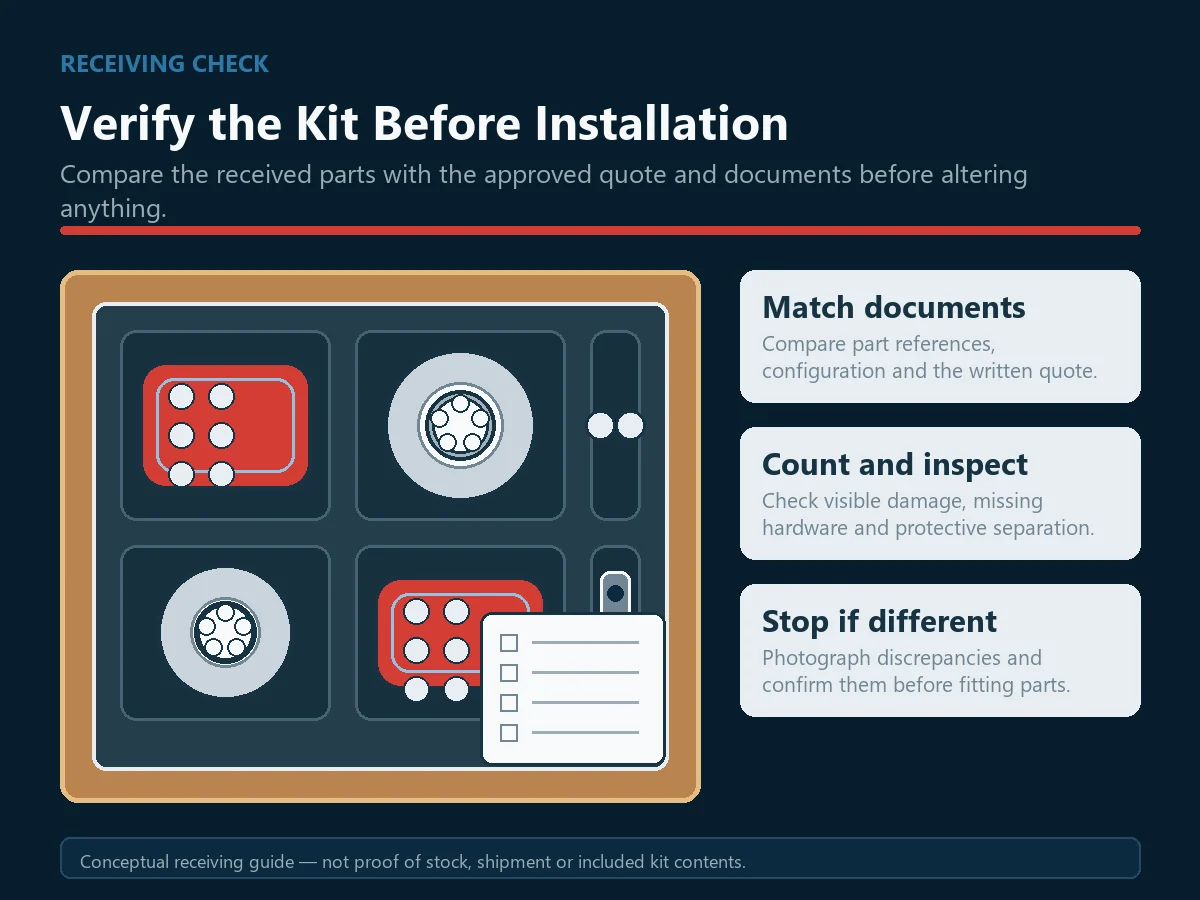
Package the photos as a record
Label each file by view, use the same vehicle reference in every message and keep the wheel measurements beside the images. The reviewer should not have to guess which wheel belongs to which car.
AI-assisted conceptual illustration, reviewed by SteedLux Parts. The image shows a review workflow, not a shipment or fitment result.
The complete message to send
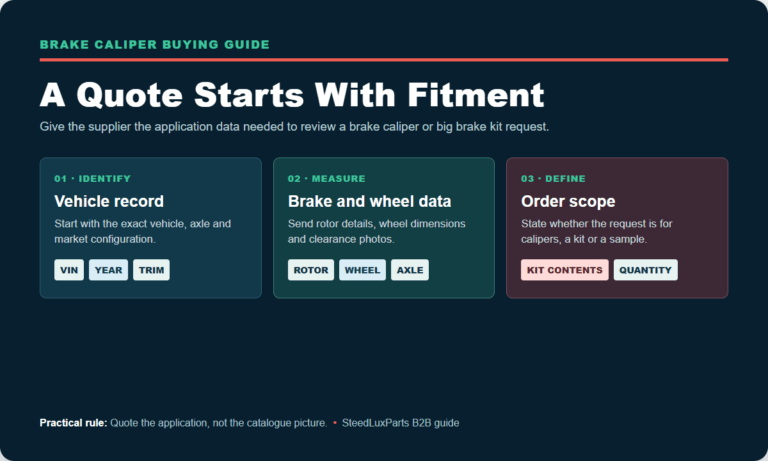
- Vehicle make, model, year, trim and market.
- VIN or chassis number, sent privately.
- Front, rear or front-and-rear axle scope.
- Current brake type and rotor measurements.
- Wheel size, width, ET, J and tyre size.
- Wheel-face, inner-barrel and spoke-back photos.
- Spacer, hub, suspension or previous brake changes.
- Destination country and quantity.
Name and organise the files before sending
Use a consistent label such as vehicle, wheel position and view. Keep private identifiers out of public comments and use the fitment form for the VIN. If several vehicles are in the same message, separate their folders and photos.
Also write the photo date and the wheel brand or model beside the file list. A clear record helps the buyer and reviewer identify which image belongs to which configuration later.
Brake-kit photo questions
How many wheel photos should I send?
Send at least a wheel-face view, a clean marking photo, a spoke-back photo and an inner-barrel photo. Add more views at the tightest area when the wheel is concave or modified.
Can I use photos instead of measurements?
Photos show context, but they do not replace rotor diameter, thickness, hat height or a physical clearance check.
Should I photograph wheel spacers?
Yes. A spacer, adapter or changed hub changes the wheel position and belongs in the vehicle record.
Why do you need the wheel markings?
The markings can show diameter, width, ET and the bead-profile code. A photo prevents the quote from relying on a copied listing value.
What if the car is on a lift or has changed suspension?
Include that in the message and describe the change. The reviewer needs to know that the static wheel position may differ from a standard car.
References and sources
Business or service introduction
SteedLuxParts reviews custom brake-caliper and big-brake-kit requests for workshops, importers and vehicle builders. A complete vehicle and wheel record helps the team identify what can be reviewed and what still needs physical measurement.
Contact details
Send VIN and contact details privately. Do not publish personal or vehicle identifiers in a public message.