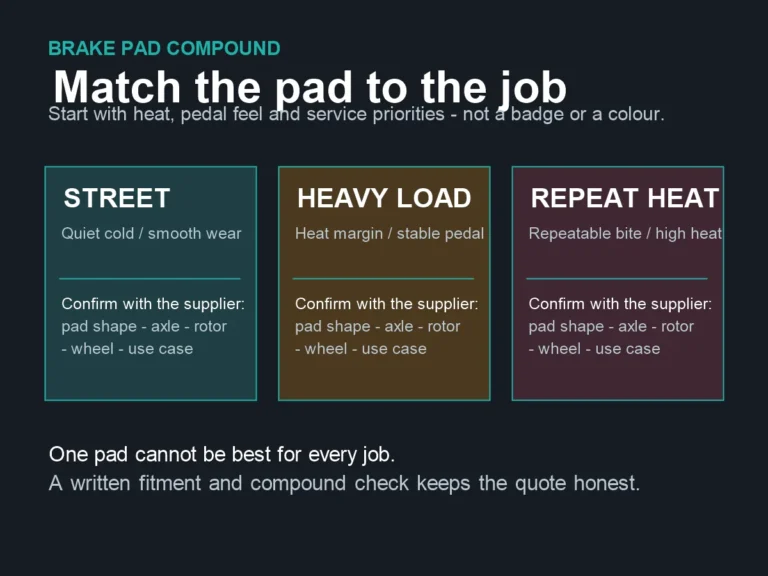
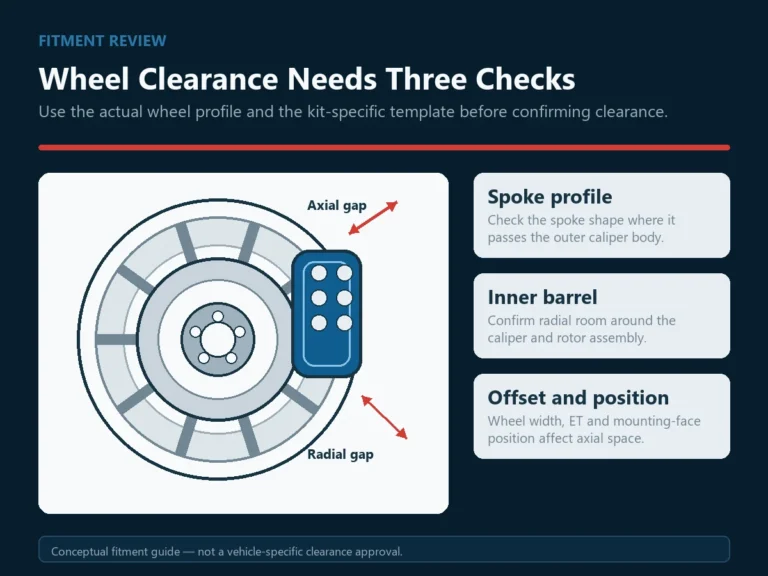
The rear brake order should start with how the parking brake works, not only with the vehicle model or brake brand. If the rear axle uses an electronic parking brake, the rear caliper usually needs an integrated electric motor. If the rear axle uses a cable-operated mechanical handbrake, the caliper may carry a cable lever instead, or the handbrake may use shoes inside a drum built into the rear rotor.
This guide maps the three common rear brake configurations to four supplied images. It is intended to help you identify the correct replacement path before ordering, while leaving exact year, trim, market and original equipment details for order-specific confirmation.
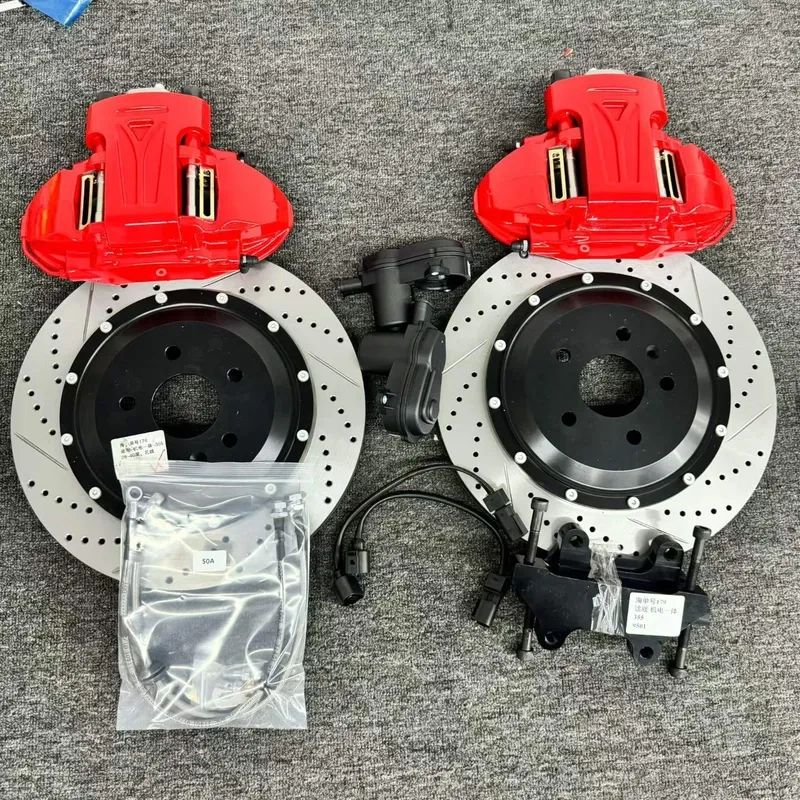
- EPB rear caliper: electric motor and electrical connector on the caliper.
- Mechanical handbrake through the caliper: cable lever or return-spring hardware, no caliper motor.
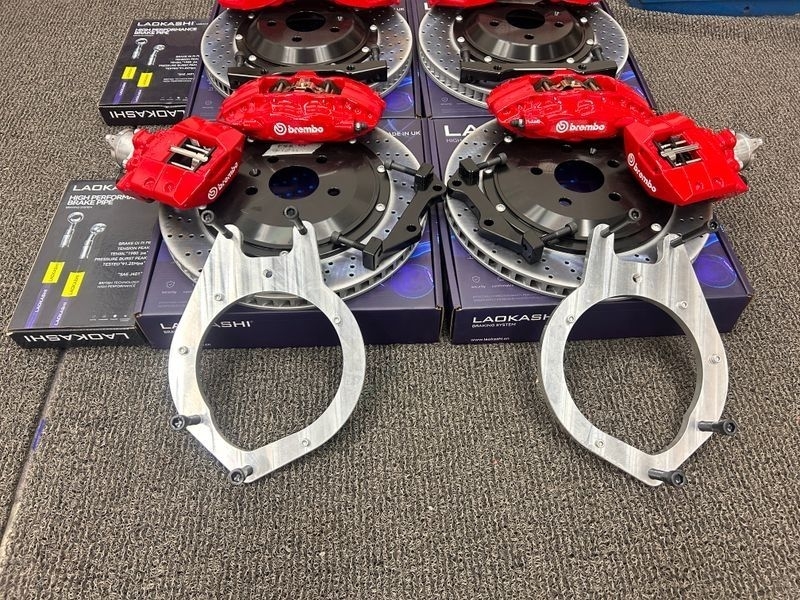
- Mechanical handbrake through the rotor: hydraulic-only caliper plus a drum surface inside the rear rotor.
- Rotor requirement: drum-in-hat rotors are only required when the handbrake shoes operate inside the rotor.
- Confirmation required: vehicle year, trim, VIN, original brake system and parking brake type must be verified.
How do I identify the rear parking brake type?
Look at the rear caliper and the cable or connector path first. An EPB caliper has an electric motor mounted to the caliper body and an electrical connector. A caliper-operated mechanical handbrake has a cable attachment, lever or return-spring mechanism, but no motor. A drum-in-hat system uses a caliper without handbrake hardware and a cable that enters the rear rotor or backing plate to operate separate shoes.
Three rear brake configuration paths
| Rear setup | Rear caliper feature | Rear rotor feature | Image reference |
|---|---|---|---|
| Electronic parking brake | Integrated electric motor and electrical connector. | Standard rotor, normally no handbrake drum inside. | Image 1 |
| Mechanical handbrake through caliper | Cable lever or handbrake mechanism on the caliper. | Standard rotor, normally no handbrake drum inside. | Image 2 |
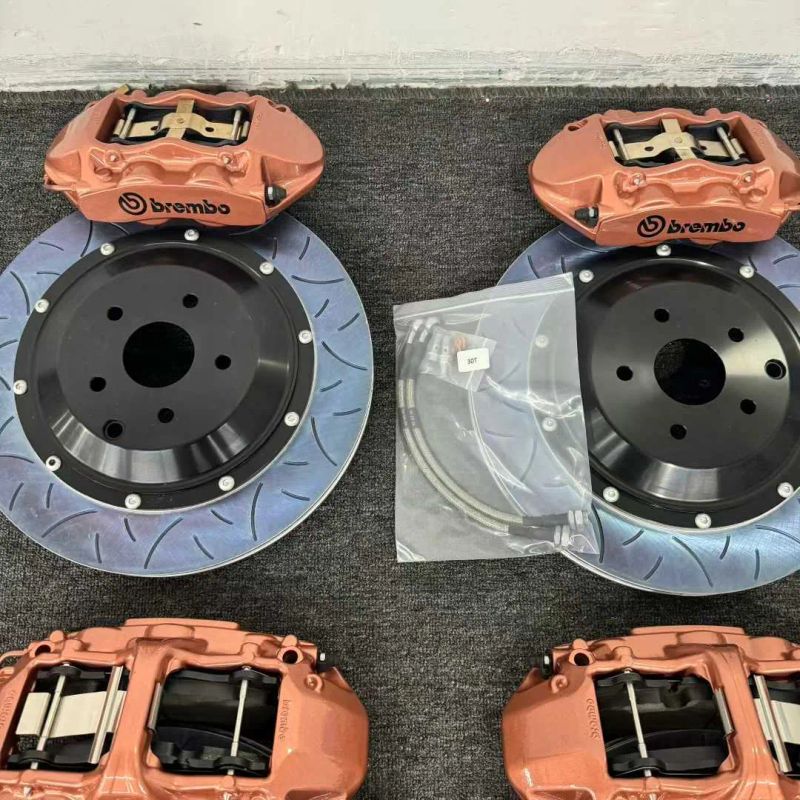
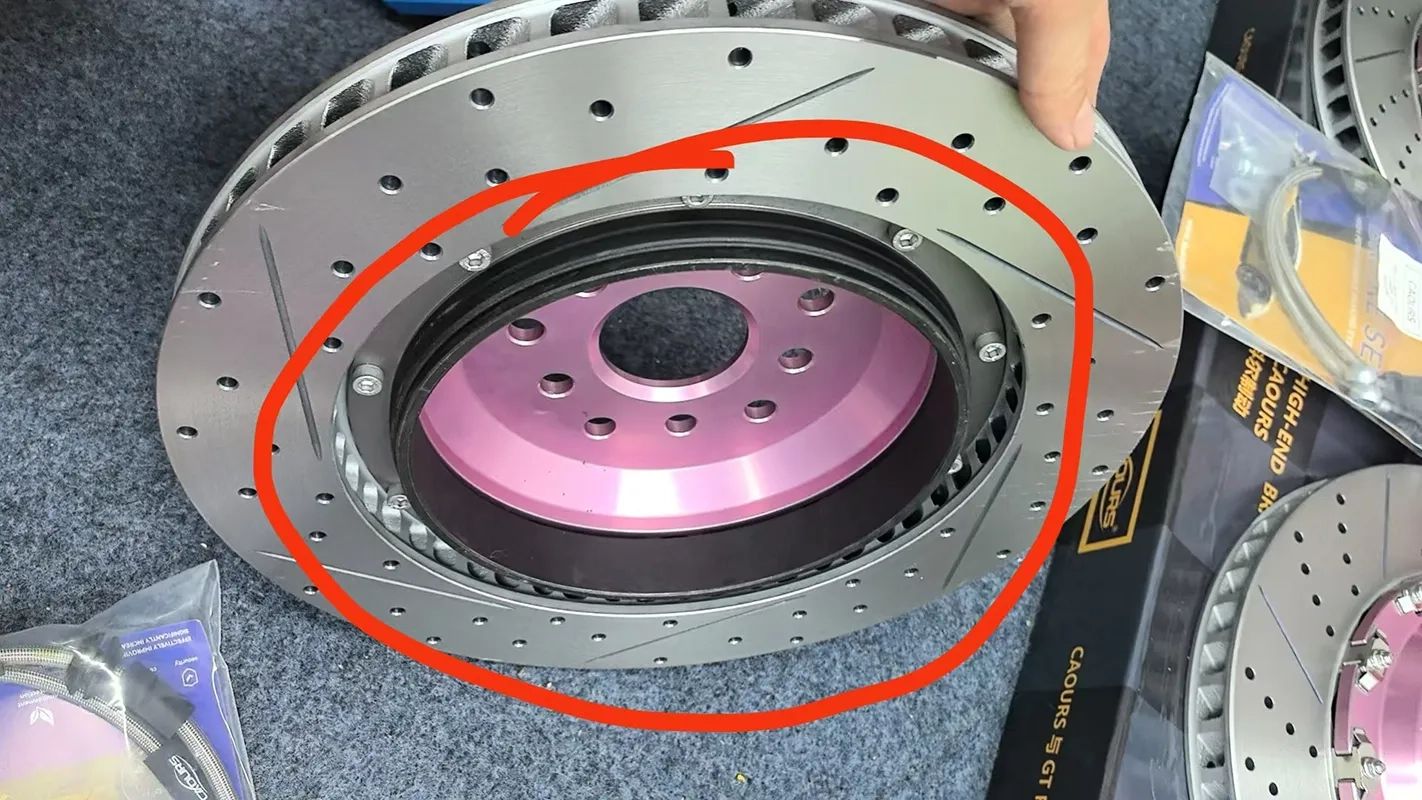
| Mechanical handbrake through rotor | Hydraulic-only caliper with no handbrake motor or lever. | Drum-in-hat surface for parking brake shoes inside the rotor. | Images 3 and 4 |
EPB rear brake: does the caliper need an electric motor?
Yes, when the factory electronic parking brake acts through the rear caliper. The replacement caliper should be supplied with an integrated electric motor and the correct electrical connector. A standard hydraulic rear caliper cannot substitute for an EPB caliper unless the vehicle is being converted and the system is re-engineered, which is a separate project.
Confirm the motor style, connector position, brake pad shape, mounting interface and service procedure before ordering. EPB systems may also require a workshop service tool, electronic release procedure, calibration or coding after installation. A visual match is not enough by itself.
Mechanical handbrake through the caliper: does the caliper carry a motor?
No. A rear caliper for a cable-operated mechanical handbrake carries a handbrake lever or cable mechanism, not an electric motor. The rotor is normally a plain or ventilated brake disc without a parking brake drum inside the hat.
Use this path when the handbrake cable is connected directly to the rear caliper and the caliper applies the parking brake by moving the piston mechanically. Confirm the lever orientation, cable attachment, piston reset direction and left or right side before ordering.
If the mechanical handbrake is not on the caliper, does the rotor need a drum-in-hat?
Usually yes. When the handbrake shoes sit inside the rear rotor, the rotor must have an integrated drum-in-hat surface. The hydraulic caliper only handles service braking, while the parking brake cable operates separate shoes inside the rotor hat.
The drum surface is not a style choice. It must match the parking brake shoe diameter, shoe width, cable orientation and backing plate layout. If the wrong rotor is installed, the parking brake may not hold the vehicle or the shoes may not seat correctly.
What should I send to confirm the correct rear brake package?
A useful rear brake enquiry identifies the parking brake path and the visible hardware before price or packaging is discussed. Photograph the caliper, electrical connector or cable lever, rotor hat and any backing plate, then send the vehicle information for private verification.
Rear brake selection checklist
- Vehicle year, trim, engine, market and VIN.
- Rear axle position: left, right or complete pair.
- Parking brake type: EPB, mechanical through caliper or drum-in-hat.
- Caliper photos showing the motor, electrical connector, cable lever or no handbrake hardware.
- Rotor photos showing the outer disc and any inner drum surface.
- Rotor outer diameter, thickness, hat height, center bore and mounting data.
- Drum-in-hat inner diameter and depth when handbrake shoes are used.
- Brake pad shape, caliper mount position, hose fitting and side orientation.
- Wheel diameter, width, offset and spoke clearance if a full kit is required.
- Quantity, finish, packaging, lead time and current warranty terms.
For a product-specific rear caliper and rotor recommendation, submit the same details through the parts team. You can also check the installation guide and use the OE lookup only as a first filter, not as a substitute for hardware inspection.
Frequently asked questions
How do I know if my rear brake is EPB or mechanical?
Inspect the rear caliper. An EPB caliper has an electric motor and electrical connector. A mechanical caliper handbrake has a cable lever or handbrake mechanism. A drum-in-hat system has a hydraulic caliper without handbrake hardware and a cable entering the rotor or backing plate.
Does an EPB rear caliper always have an electric motor?
For a factory EPB system that acts through the caliper, the replacement caliper should include the correct integrated motor and electrical connector. Exact motor, connector and service requirements must be confirmed for the vehicle.
Do I need a drum-in-hat rotor for a mechanical handbrake?
Only when the parking brake shoes are mounted inside the rear rotor. If the mechanical handbrake cable operates the rear caliper directly, a drum-in-hat rotor is normally not required.
Can I install a caliper with a motor on a mechanical handbrake vehicle?
No standard direct substitution is implied. A caliper should match the original parking brake control, mounting interface and hydraulic system. A caliper with a motor is designed for an EPB system, not for a cable-operated mechanical handbrake.
What photos should I send for a rear brake quote?
Send clear photos of the rear caliper, electrical connector or cable lever, rotor hat and backing plate, plus vehicle information and measurements. This helps the supplier confirm the correct EPB or mechanical handbrake path.
Conclusion
Start with the parking brake type, then match the caliper and rotor to that control method. An EPB system points to a caliper with an integrated motor. A mechanical handbrake either works through a cable-operated rear caliper or through drum-in-hat shoes inside the rear rotor. The rotor needs an inner drum only when the handbrake shoes use one.
For a reliable quote, send vehicle details, caliper and rotor photos, measurements and the confirmed parking brake path to the parts team. Exact year, trim, market, original equipment and installation requirements should be approved in writing before ordering.