A Hilux brake caliper upgrade starts with the vehicle in front of you, not a generic model list. Wheel shape, rotor and hub geometry, the original brake system and the package list all matter. This guide shows what to collect before a SteedLuxParts V6-Series six-piston front setup is quoted.
A Toyota Hilux brake caliper upgrade can’t be signed off from a VIN or an 18-inch wheel claim. VIN identifies the baseline vehicle; the wheel, rotor, hub and current brake layout tell the rest. Send those measurements and photos before the caliper, disc, bracket and hose package is specified.
Product naming: V6-Series identifies the seller’s six-piston caliper series; it is not a claim about a Toyota Hilux V6 engine.
Where Hilux Brake Upgrades Usually Get Stuck
The research set contained 74 deduplicated public comments and questions. Fitment geometry appeared in 27 tagged items, ahead of purchasing, hydraulic and installation concerns. One item could carry several tags. These figures describe the collected sample only; they are not search volume or market share.
Will an 18-Inch Wheel Clear a Six-Piston Hilux Caliper?
It might, or it might not. Nominal diameter doesn’t show the spoke curve or the usable space inside the barrel. Two 18-inch wheels can behave very differently. The AP Racing clearance guidance therefore works from a wheel profile and template, not the number stamped on the tyre.
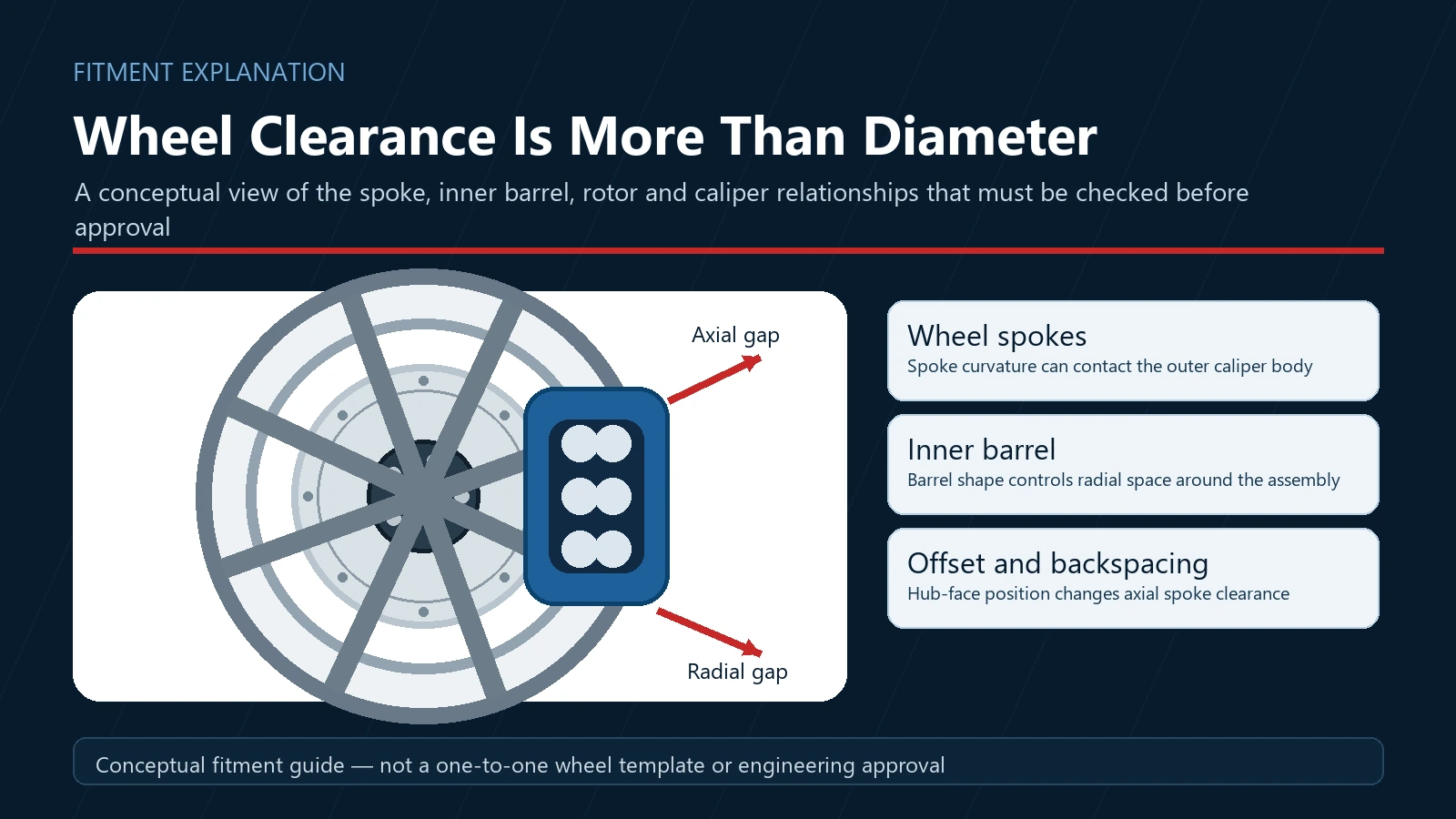
Read radial and axial clearance separately
Radial clearance is the space between the caliper envelope and the inner wheel barrel. Axial clearance is the space between the outer caliper face and the back of the spokes. A wheel can pass one check and fail the other.
- Record wheel width, ET and backspacing rather than diameter alone
- Include the spoke curve, inner-barrel shape and wheel-weight location
- Use the supplier’s exact caliper template when one exists
- Do not treat grinding or an arbitrary spacer as a standard correction
Rotor Diameter Is Only the Starting Point
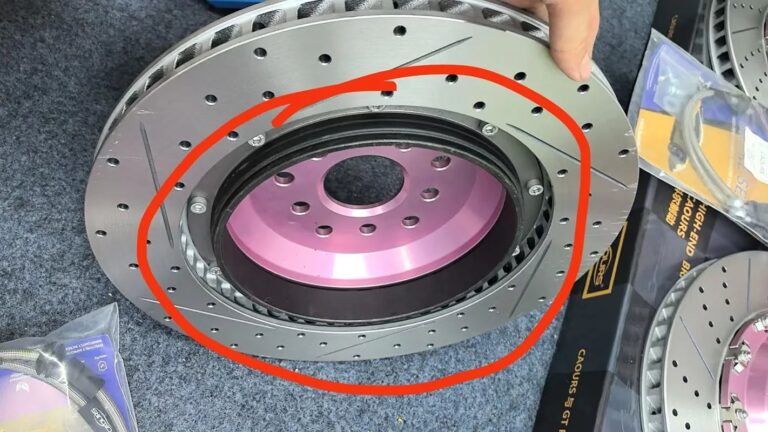
The 345, 355 and 380 mm figures are short-list options supplied for quotation. They are not fitment results. Diameter affects radial clearance, while thickness, hat position, center bore, PCD and annulus decide where the rotor actually sits. The caliper still has to land on the rotor centerline with the intended pad sweep.
| Wheel | Candidate Rotor | Main Risk | Evidence Required |
|---|---|---|---|
| 18 inch | 345 or 355 mm | Spoke or inner-barrel interference | Wheel profile, ET, backspacing and template |
| 19 inch | 355 or 380 mm | Radial or axial clearance mismatch | Wheel geometry, rotor thickness and hub-face data |
| 20 inch | 380 mm | Hat or bracket position mismatch | Rotor, hub, caliper-envelope and mounting drawings |
| 21 inch | 380 mm | Assuming a large wheel removes all risks | Complete wheel, rotor, hub, hose and system review |
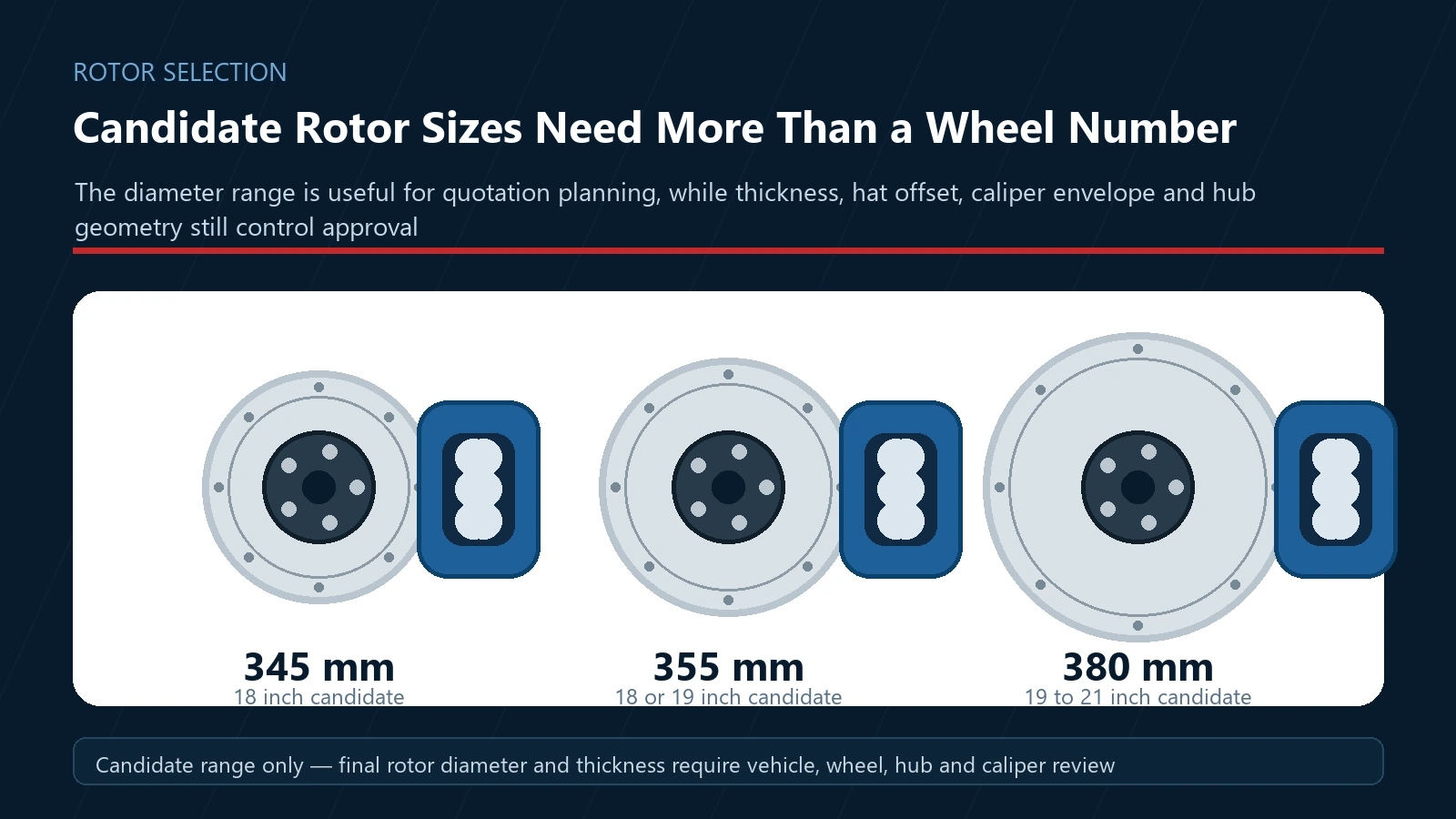
Measure more than outside diameter
- Thickness: must suit the caliper and pad opening
- Hat height and offset: place the friction ring on the intended centerline
- Center bore and PCD: locate the rotor on the correct hub
- Annulus: should correspond with the intended pad sweep
- Runout: must be checked using the exact installation instructions
Repair First or Upgrade?
Not every Hilux needs six-piston calipers. Sometimes the real fault is a seized piston, tired fluid, worn pads, a damaged hose or poor adjustment. Fix that first. An upgrade makes sense only after the buyer can name the problem it is meant to solve.
Repair the Original System
Start here when the complaint points to worn pads or rotors, seized pistons, old fluid, damaged hoses, adjustment, tyres or missed maintenance. A bigger caliper won’t cure a basic fault.
Plan a Front Upgrade
Move to an upgrade when the use case is clear and the wheel, rotor, hydraulic, installation and service-parts checks are part of the plan.
Review the Whole Vehicle
Tyres, load, rear brakes, master cylinder, ABS or ESC, suspension changes and a load-sensing valve can affect the final system decision. Six pistons alone do not establish a measured performance result.
Read the BOM Before the Box Arrives
A product photograph is not a packing list. The quotation needs a separate row and quantity for the calipers, pads, rotors, hats, brackets, hoses and hardware. Brake fluid is conditional because its specification and transport restrictions vary. If an item isn’t written into the approved BOM, don’t assume it will be in the carton.
| Component | Indicative Quantity | Order Detail to Lock Down |
|---|---|---|
| V6-Series front calipers | 2 | Left and right handing, envelope, piston specification and rotor-thickness support |
| Front brake pads | 4 | Pad shape, compound and replacement reference |
| Front rotors or rings | 2 | Diameter, thickness, annulus, direction and service specification |
| Rotor hats or bells | 2 | PCD, center bore, offset, hardware and exact drawing |
| Caliper mounting brackets | 2 | Mounting points, bolt specification, alignment and exact drawing |
| Brake hoses | 2 | Thread, flare or banjo, angle, length, routing and handing |
| Bolts, washers, shims or adapters | As quoted | Every required item, grade, location and installation reference |
| Brake fluid | 1 when permitted | Fluid specification, SDS, carrier and destination restrictions |
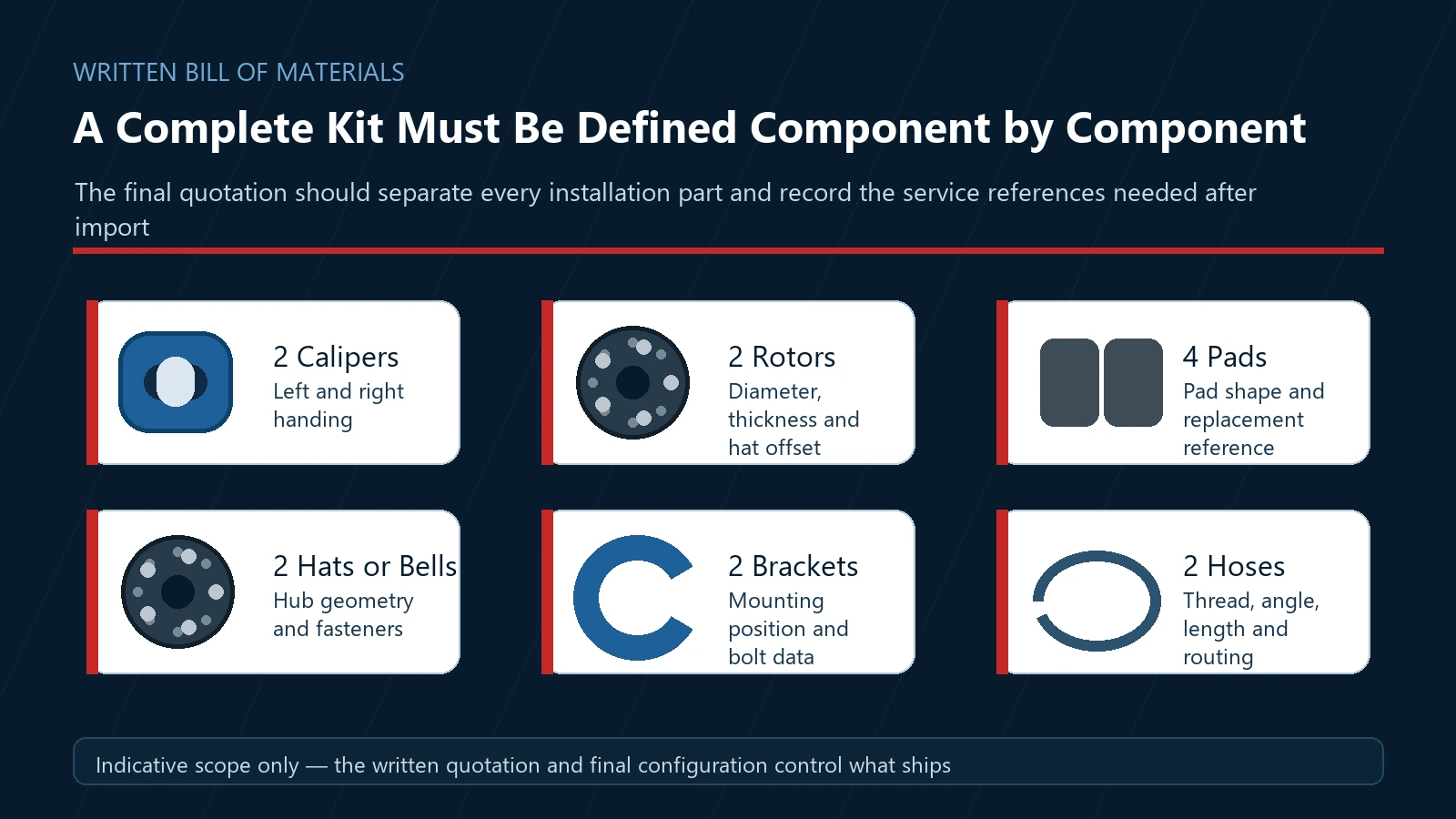
Use the BOM before the workshop starts
Check the carton against the approved list before the workshop removes the original brakes. Keep the configuration code, pad reference, rotor specification and service-part details with the first order. Rebuilding that information months later is slow and error-prone.
Can the Original Master Cylinder, ABS and Rear Brakes Be Assumed Compatible?
No. A custom front caliper can change fluid demand, pedal travel and front-to-rear behavior. The exact piston area, master-cylinder bore and stroke, booster, rear brake configuration, LSV or proportioning system, ABS or ESC variant and tyre grip need qualified review. Physical fitment alone is not hydraulic or vehicle-system approval.
| Check | Why It Matters | Evidence or Action |
|---|---|---|
| Caliper handing and bleed screws | Bleed screws need to be at the hydraulic high point | Confirm left and right parts; review the caliper-handing principle and follow the exact product instructions |
| Rotor centering and runout | The friction ring must run on the intended caliper centerline | Use the approved hat, bracket, fasteners and measurement method |
| Hose routing | A hose must not twist, stretch or rub through steering and suspension movement | Check full steering lock, suspension travel and secure routing |
| Caliper-to-wheel clearance | Spokes, inner barrel, wheel weights and tolerances can create contact | Use the exact template and written supplier or engineering review |
| Hydraulic response | Piston area and master-cylinder sizing affect pedal and line pressure | Require qualified system review and post-installation testing |
| Local approval | Inspection, registration and insurance rules vary by destination | Confirm requirements with the buyer, installer and local authority |
Plan Service Parts Before the First Order
Pad availability is not an after-sales detail. It is part of the buying decision. Public big-brake-kit discussions repeatedly ask whether a pad shape is common or locally available, but a forum reply can’t prove interchangeability for this kit. Put the rotor, seal, hose, hardware and reorder references in the quotation.
Consumables
Record pad shape and compound, rotor dimensions and any left or right direction. Confirm whether local or supplier-held alternatives are genuinely interchangeable.
Repair Items
Request seal, bleed screw, bridge hardware, hose and fastener references when available. Do not assign an OE or interchange number without a verified cross-reference.
Order Records
Keep the final BOM, drawings, finish approval, vehicle data, carton photos and configuration code so a future reorder does not start from zero.
The Kit Price Is Not the Landed Cost
Calipers and rotors are only part of the budget. Freight, duty, tax, workshop labor, a possible wheel change, approved spacing hardware, service stock, inspection and labeling can move the final number. Keep each cost category visible and replace estimates with quotation figures when the order is defined.
Seller-provided starting point: MOQ one set; 10–25 days after fitment, order and artwork sign-off; standard export packaging; indicative carton 45 × 45 × 45 cm; indicative gross weight 45 kg; stated warranty 12 months. These are quotation inputs, not fixed promises. Recheck the warranty scope for the selected configuration.
Custom Color Needs a Written Approval Trail
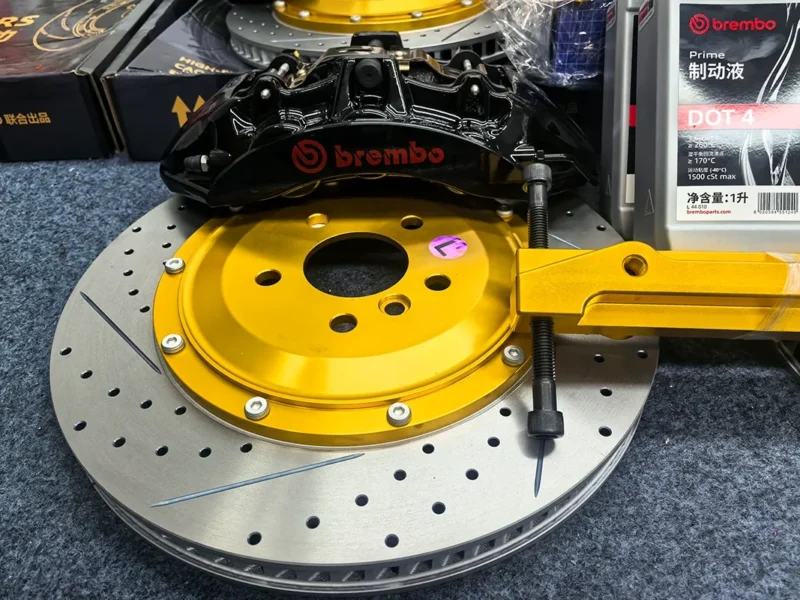
Color comes after fitment. Record the finish, buyer-authorized artwork, protected functional areas and approved BOM before production starts. No manufacturing specification or test record was supplied for this guide, so it shows the evidence a buyer can request instead of pretending a particular factory process has been verified.
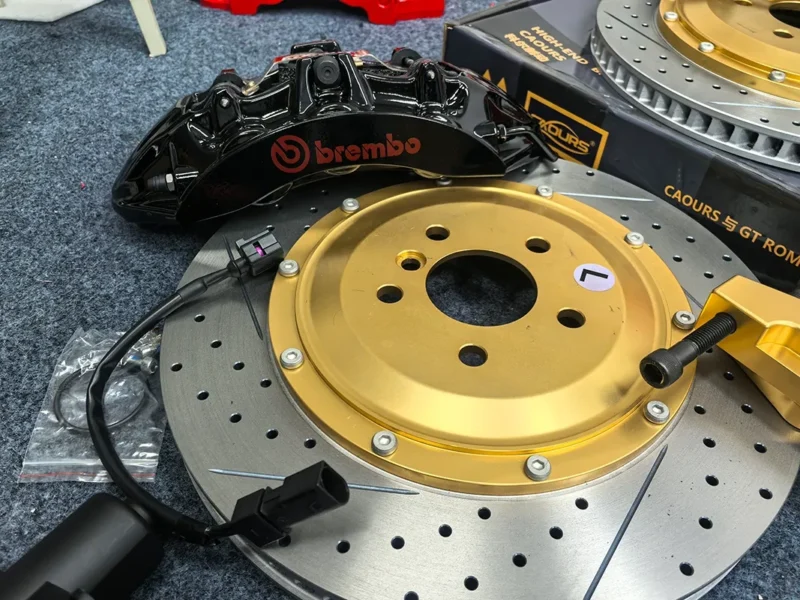
Visible finish, general component appearance, labels and the items physically present in that photograph.
Exact vehicle fitment, material, dimensions, certification, hydraulic compatibility, road legality or the final shipped BOM.
Build an Enquiry That Can Actually Be Reviewed
“Hilux, 18-inch wheels” is not enough for a usable quote. Send the vehicle, wheel and brake evidence first, then add quantity, destination and customization details. A useful reply names the proposed parts, open checks, inclusions, exclusions, service references and commercial conditions. That gives the buyer and installer something concrete to inspect.
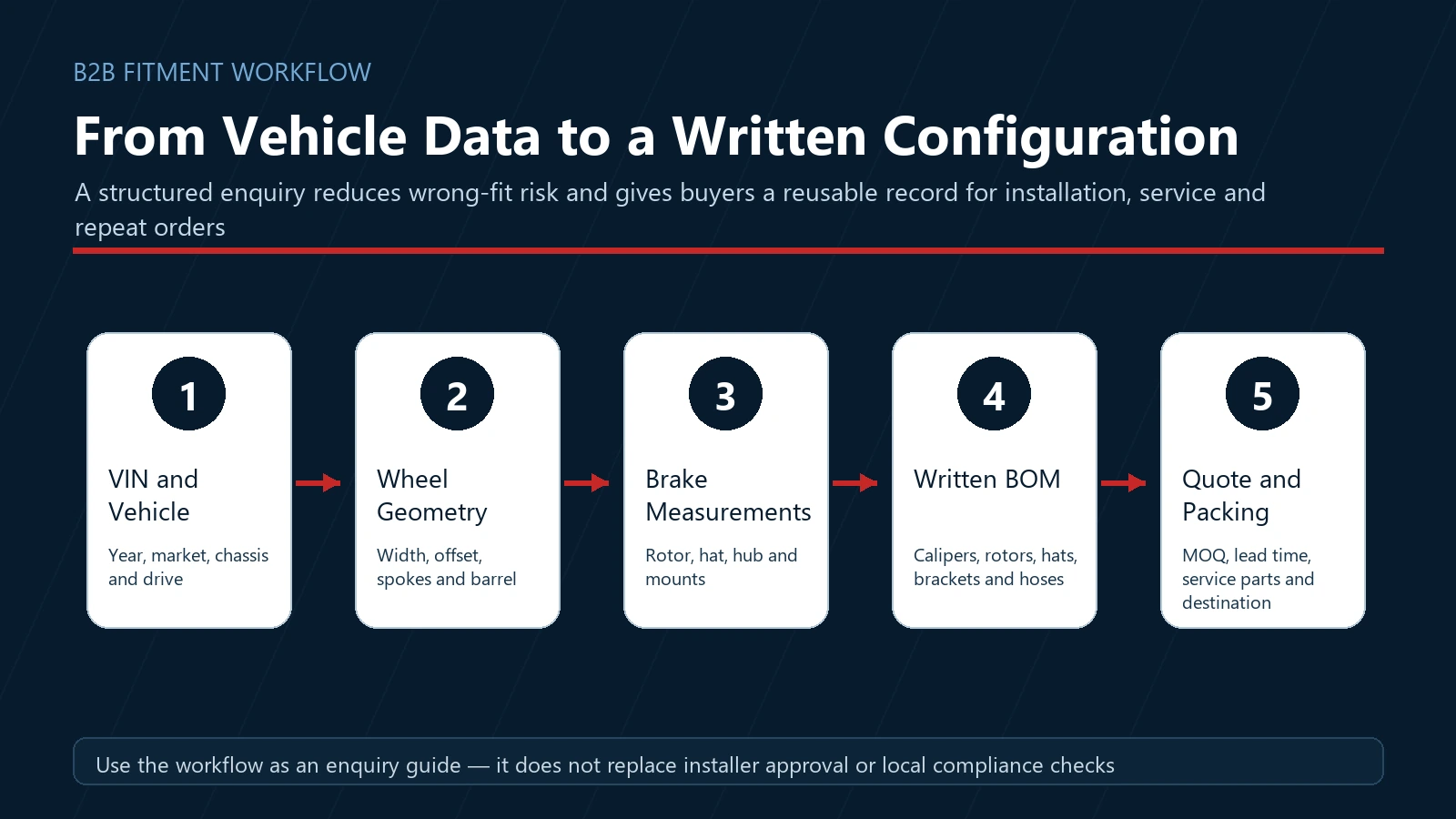
- Identify the vehicle
VIN or chassis, year, market, trim, drivetrain, original brakes and previous modifications - Document the wheel
Diameter, width, ET, model, spokes, inner barrel, wheel weights, photos and template data - Measure the brake and hub
Rotor diameter, thickness, overall height, hub data, mounts and clear photos - Approve the written configuration
Calipers, rotors, hats, brackets, hoses, hardware, service references and open checks - Confirm the order
Quantity, destination, color, artwork, packaging, lead time, warranty terms and freight basis
Hilux Brake Caliper Upgrade Guide: Frequently Asked Questions
These questions combine the sample’s most common purchase obstacles with lower-frequency issues that carry high fitment or safety risk.
Will this six-piston caliper clear my Hilux wheels?
Which rotor should I choose: 345, 355 or 380 mm?
What information is required before fitment review?
Will the kit need spacers, dust-shield changes or bracket shims?
Can I keep the original master cylinder, ABS and rear brakes?
How should the calipers, bleed screws and hoses be checked?
What may be included in the quoted front package?
Will replacement pads, rotors, seals and hardware be available later?
References and Sources
Sources were checked in July 2026. Technical references support general principles; community discussions identify buyer questions and do not prove product fitment.
Business and Service Introduction
SteedLuxParts supplies brake parts and custom-fitment kit options. Retail and B2B buyers should submit complete vehicle, wheel, brake and order data before quotation.
Browse the brake caliper product range, review the brake system category or open the Toyota Hilux brake caliper kit.