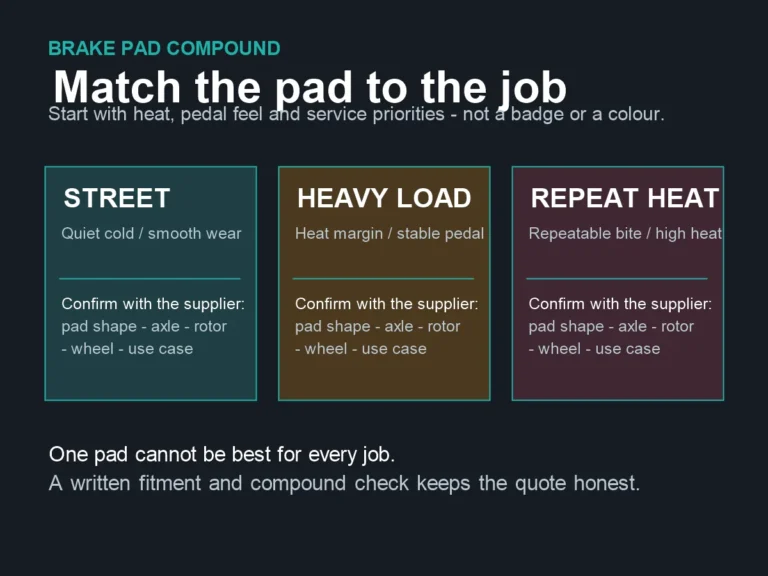
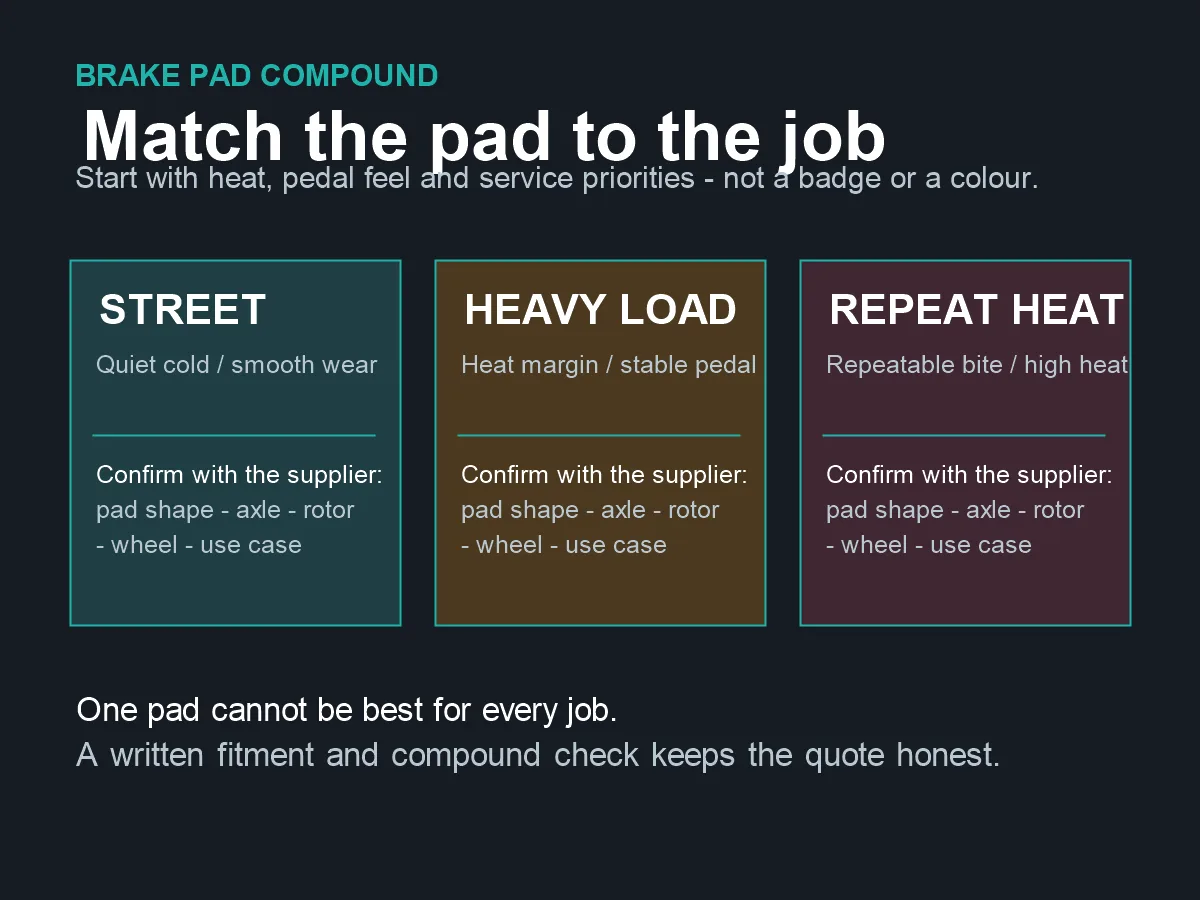
Short answer: choose a brake pad compound from the vehicle’s real operating window, not from a colour or a broad “performance” label. Street, towing and track use can require different compromises in cold response, noise, dust, wear and heat management. Confirm the exact pad shape, axle, rotor and hardware before requesting a quote.
What “compound” changes in a brake pad
Compound is the friction material formulation on the pad. It affects how the brake responds when cold, how it behaves as temperature rises, pedal consistency, noise, dust and wear. Those traits are related, but they are not the same thing as vehicle fitment. A pad still needs the correct shape, backing plate, axle position and hardware for the caliper and rotor.
Marketing labels such as ceramic, semi-metallic, performance or racing are not a complete specification. Ask for the supplier’s application data and exact part reference instead of selecting by colour or piston count. If the application sheet is missing, treat the compound as unverified rather than filling the gap with a generic temperature or friction claim.
Decision table: match the use case first
| Use case | Prioritise | Confirm before ordering |
|---|---|---|
| Daily street | Cold response, modulation, noise and dust tolerance | Pad shape, rotor condition, axle and normal load |
| Towing or hills | Repeatable control under the planned load | Route, loaded mass, rotor data and bedding instructions |
| Track sessions | Heat-cycle suitability and inspection cadence | Circuit use, session length, tyre, mass and driver pace |
This table is a planning aid, not a performance test. A supplier must still verify the exact application and state any conditions that make the recommendation unsuitable.
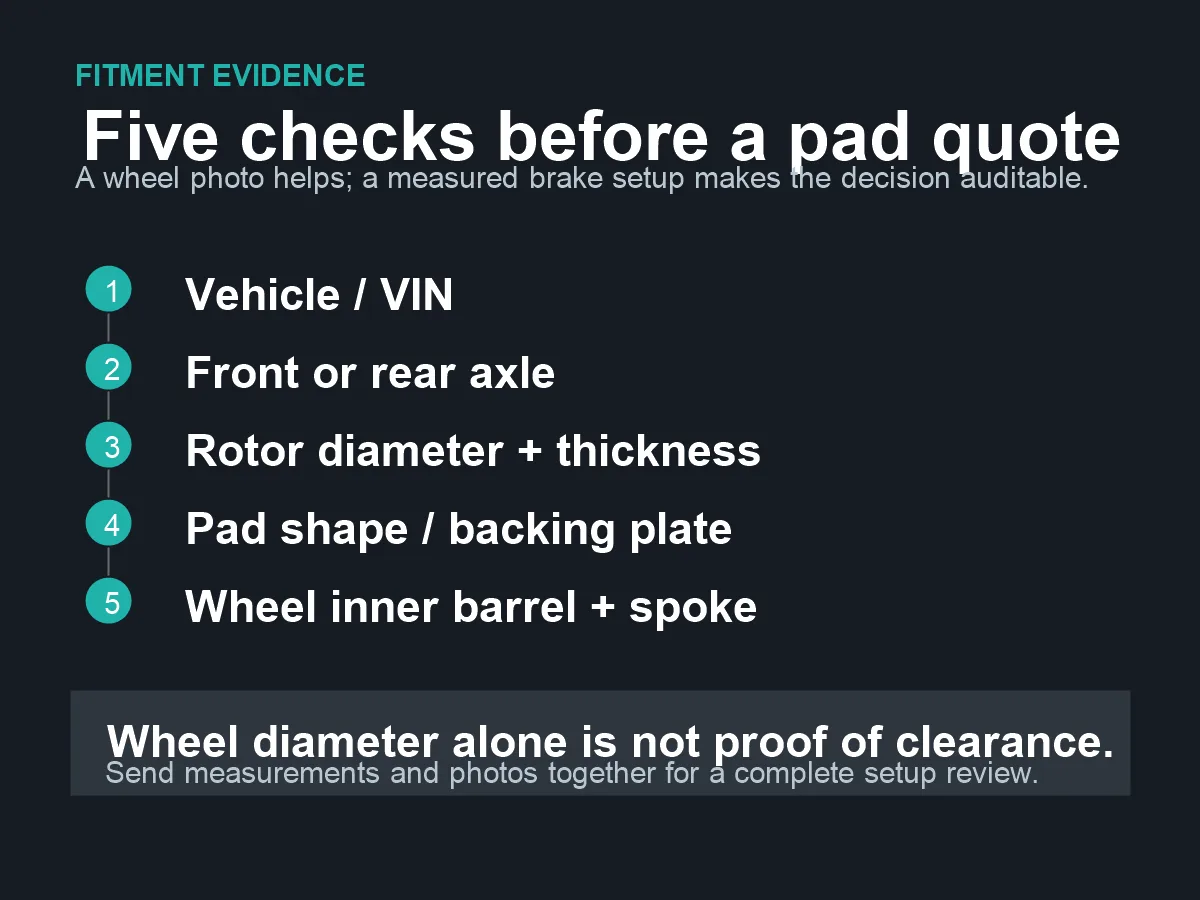
Five checks before you request a quote
- Vehicle reference: send year, model, trim and VIN or chassis reference where available. Model names alone can hide multiple brake packages.
- Axle and side: state front or rear, and left or right if the part is side-specific. Rear applications can involve parking-brake details that do not apply to the front.
- Rotor data: record rotor diameter and thickness, plus photos of the current setup. Do not infer disc size from wheel diameter.
- Pad shape: provide the old pad reference or a clear backing-plate photo. Confirm whether the request is pads only or a matched caliper, rotor and pad package.
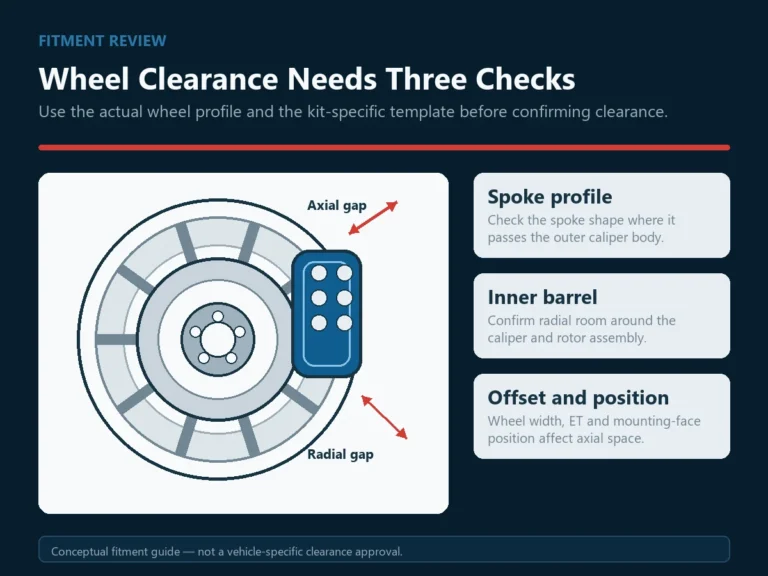
- Wheel and use case: send wheel diameter, width and offset if known, inner-barrel/spoke photos, intended use, quantity and destination country. Wheel diameter alone cannot prove clearance.
How to compare a supplier’s answer
A useful quote states the exact pad reference, axle, quantity, compatible rotor or caliper reference, and what is included. It should separate confirmed facts from assumptions and identify anything that still needs a measurement or photo. Ask how the compound is intended to be bedded, what service parts are available and which conditions would make the recommendation unsuitable.
For a custom brake kit, use the big brake kit measurement checklist before comparing package prices. For general sourcing, the Brake System Guides category keeps fitment and RFQ checks together.
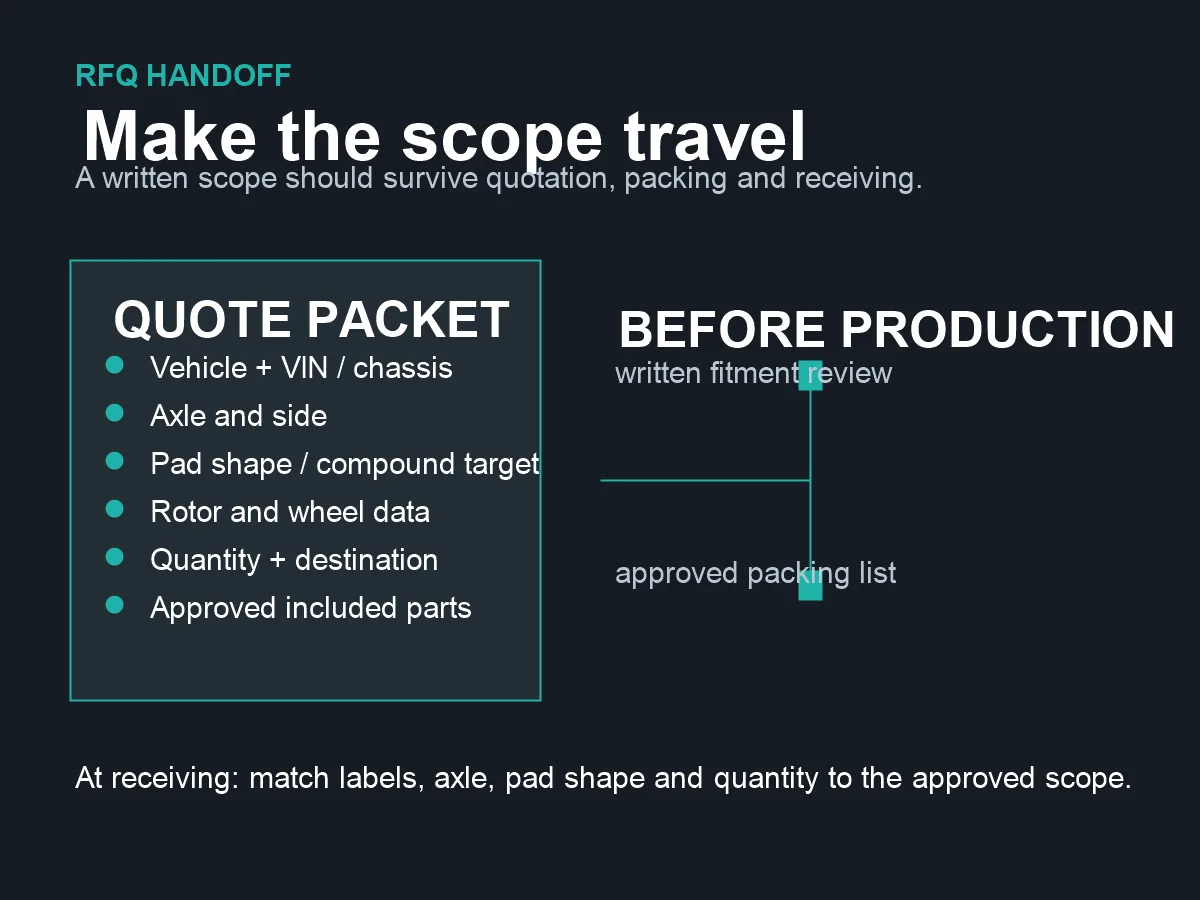
Questions to settle before production
- Is the recommendation for street, heavy-load or track use, and what compromises should the buyer expect?
- Which exact pad shape and reference were checked against the vehicle and axle?
- Are rotors, calipers, brackets, hoses or sensors part of the same approved scope?
- What measurements, photos or VIN details remain unverified?
- Will the packing list and labels identify the axle, side and quantity?
Brake pad compound FAQs
Is a track compound suitable for daily driving?
Not automatically. Track-oriented pads can trade cold manners, noise, dust or wear for a different heat-cycle target. The supplier should confirm the intended use and any road-use limitations for the exact application.
Does wheel diameter identify the correct pad?
No. Wheel diameter cannot prove pad shape, rotor size, caliper clearance or axle fitment. Use the existing pad reference, rotor measurements, vehicle identity and clear photos.
Can a compound be selected by colour?
No. Colour is not a complete specification. Request the supplier’s application data, part reference and use-case guidance in writing.
Should front and rear pads use the same compound?
Do not assume so. Front and rear axles have different hardware, loads and control roles. Verify each axle separately and keep the approved scope separated.
What if the supplier cannot confirm the pad shape?
Pause the order and provide a clear backing-plate photo, old reference, axle and vehicle data. An unconfirmed shape is a fitment blocker, not a reason to guess.
References and Sources
- Wilwood Brake Pads technical PDF (evergreen application guidance).
- NHTSA brake safety guidance (evergreen maintenance context).
- Current SERP comparison sources checked 2026-07-31: Players Club Cars (2026-07-20), Alcon Brake Kits, Hinz Motorsport and Essex Parts. Their product claims are not treated as SteedLux facts.
Business and Service Introduction
SteedLux Parts supports B2B and wholesale brake-part enquiries with evidence-led fitment review. We separate confirmed application data from candidate configurations so the quotation can be checked before purchasing.
Contact Details
B2B Wholesale Send the vehicle reference, axle, current rotor and pad photos, wheel details, intended use, quantity and destination.
Bottom line
The best brake pad compound is the one that matches the vehicle, operating window and service priorities with evidence behind the fitment. Start with the use case, capture the brake and wheel data, then approve the exact part reference and included scope in writing. That process is more reliable than choosing a pad from a generic “performance” label.