

Toyota Alphard Brake Caliper Kit: AH10 to AH40 Review
Reviewed by the SteedLuxParts engineering team
Last updated September 25, 2026
Toyota Alphard brake caliper kit in a V6 six-piston front set: 2002–2023 generation records, 345–380 mm rows and a wheel and trim review
Set price
Quantity pricing updates automatically
$448.00
/ set
1-9 sets
Wholesale tier pricing Lower pricing for larger orders
1-9 sets
Sample or retail orders
$448.00/ set
10-49 sets
Small wholesale batch Recommended
$380.00/ set
Save $68 per set
50-199 sets
Core dealer volume
$350.00/ set
Save $98 per set
Product details
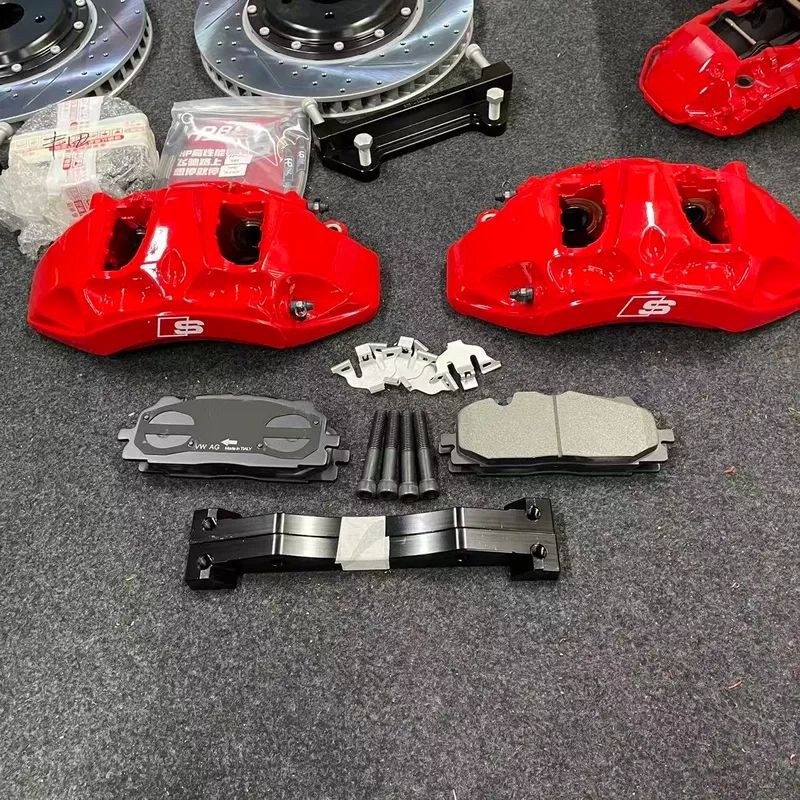
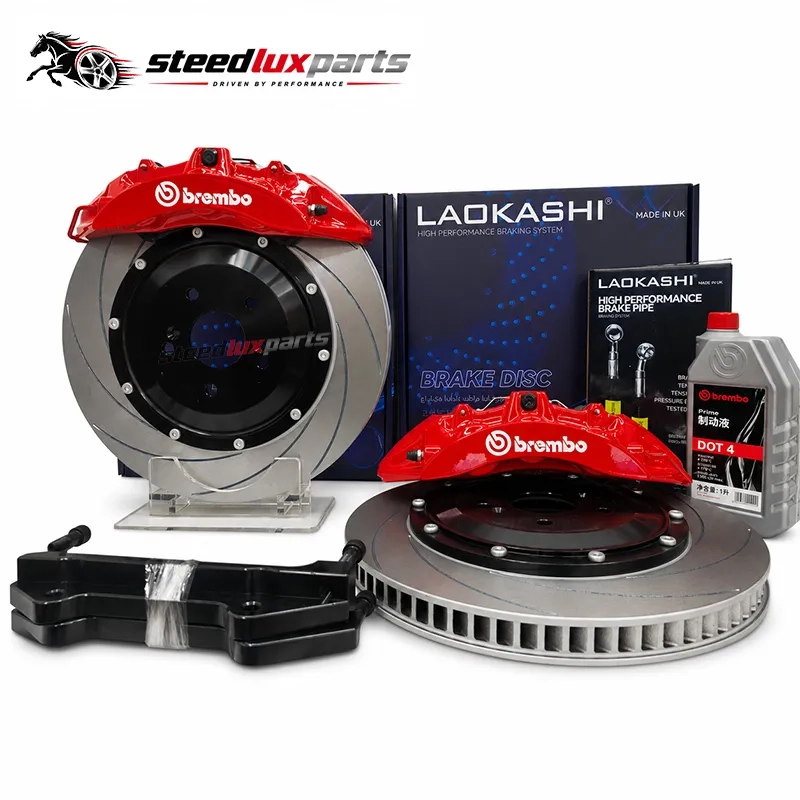
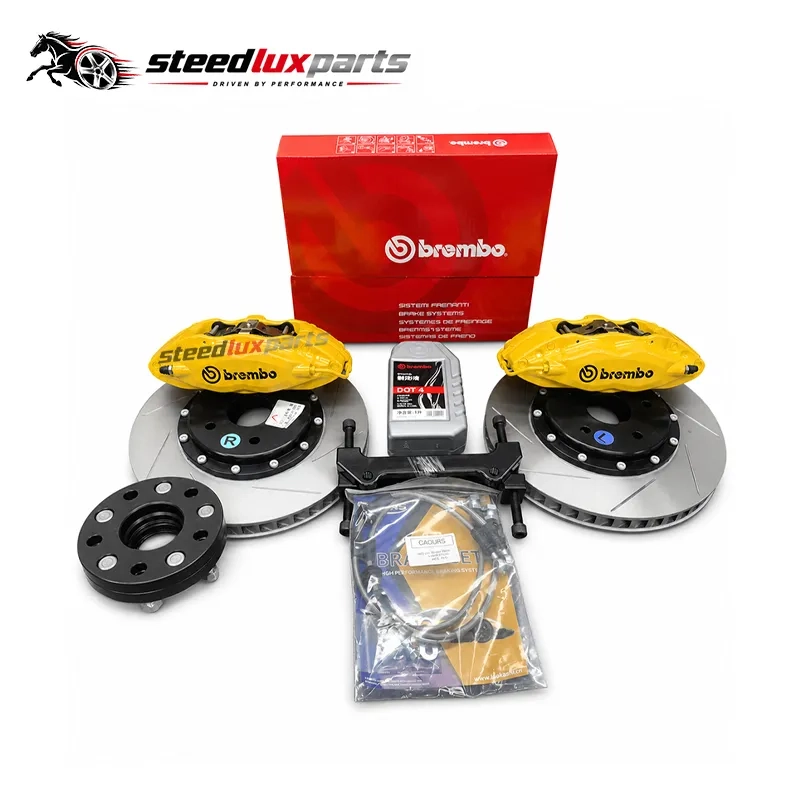
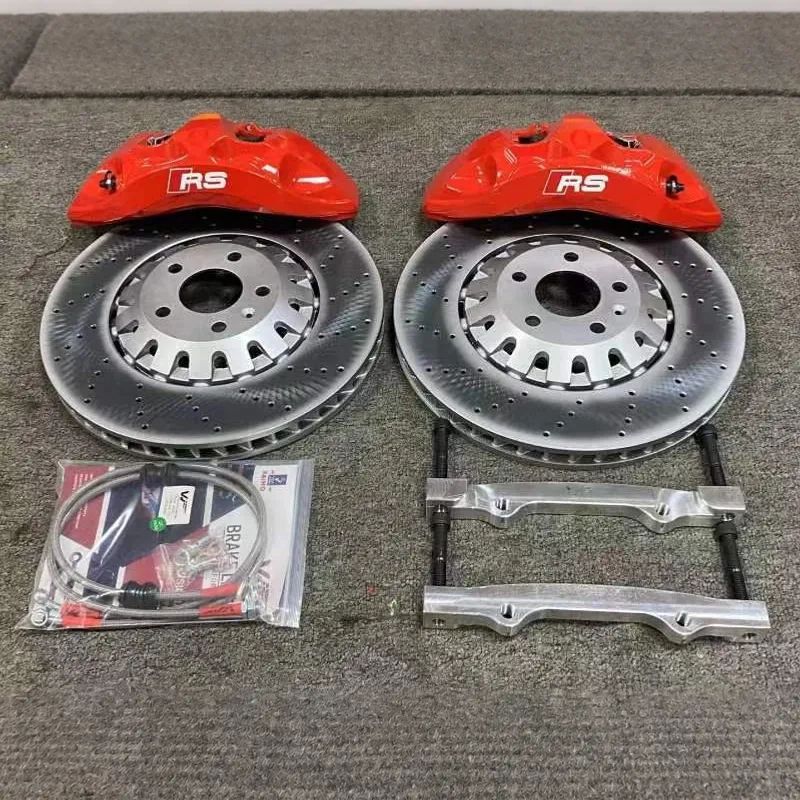
2 calipers, 2 adapter brackets, 2 brake rotors, 4 brake pads and 2 brake hoses, with the confirmed content written on the approved quotation and packing list
Shipping and lead time
Ships to
United States
Shipping
from $50.00
Delivery
about 20-35 business days
Fitment information
We check OEM wheels with the vehicle year and VIN in our database. For aftermarket wheels, we also need ET, J, spoke, and inner-barrel details.
Warranty and returns
5 years against manufacturing/quality defects only View the full returns policy.
Product information
Product Details & Fitment
The application shown on this page is a reference configuration. It is not a universal-fit claim and it is not the only vehicle application we can review.
Fitment review required
Confirm the vehicle and wheel before production
We check OEM wheels with the vehicle year and VIN in our database. For aftermarket wheels, we also need ET, J, spoke, and inner-barrel details.
- Vehicle model and year
- VIN / chassis number
- Wheel size
- OEM or aftermarket wheel
- Front calipers, rear calipers, or front and rear kit
| Brand | steedluxparts | Category | Big Brake Kits |
|---|---|---|---|
| SKU | SLP-ALPHARD-BC-V6-6P-F-KIT | Minimum order quantity | 1 set |
| Compatible Vehicles | Toyota Alphard, 2002 onwards, in the generation, trim and market the van was actually built for; AH10, AH20, AH30 and AH40 records are opened from the year and VIN rather than assumed from the name | Year Range | The Alphard has been produced since 2002 across four generations, AH10 (2002-2008), AH20 (2008-2015), AH30 (2015-2023) and AH40 (2023 onwards), with facelifts in 2011 and 2018; the build date comes from the VIN |
| Supplementary Note | The record follows the trim and the front brakes fitted to the van rather than the model name, because the range has included hybrid and petrol versions since 2003 | Brake Line / Interface Notes | Two brake hoses per set; fitting type, routing across full steering travel and suspension movement are agreed before production |
| Installation Type | Confirm before order | Additional Setup Required | Depends on the vehicle |
| Brake Kit Notes | V6 six-piston front caliper kit with planning rows of 345 or 355 mm at 18 inch, 355 or 380 mm at 19 inch and 380 mm at 20 to 21 inch, quoted only after the vehicle and wheel record is approved | Included Brake Parts | 2 calipers, 2 adapter brackets, 2 brake rotors, 4 brake pads and 2 brake hoses, with the confirmed content written on the approved quotation and packing list |
| Warranty | 5 years against manufacturing/quality defects only | Packaging | Standard export packaging |
| Carton Size | 45 x 45 x 45 cm | Gross Weight | 45 kg |
| MOQ | 1 set |
Alphard: AH10 to AH40 under one name
Key takeaways
- Four codes, one name: the market sells these kits as AH10 (2002 to 2008), AH20 (2008 to 2015), AH30 (2015 to 2023) and AH40 (2023 onwards), with facelifts in 2011 and 2018.
- A loaded vehicle, not a track car: seven or eight seats and, on the first generation, between 1,770 kg and 2,050 kg on a 2,900 mm wheelbase.
- Trim leads the file: hybrid versions have been in the range since 2003, so the trim and the front brakes actually fitted come before any rotor row.
- Eight fields and a price line need a decision: the Sold As field reads Left only, the install fields promise an original-part replacement with no extra work, the market and setup fields read left-side market and standard factory, MOQ reads 1 unit, three commercial fields are placeholders, three cells reference an internal brief, the page summary names a different Toyota model, and a struck figure sits beside the price ladder.
If you searched for Toyota Alphard brake caliper kit, the van in front of you is one of four generations that share the name and almost nothing else in the parts catalogue. This page starts with the year, the trim and the VIN, then works outwards to the wheel and the rotor rows.
Why the record asks for the year and trim
One nameplate covers petrol and hybrid vans built over two decades, so the record is opened from the vehicle rather than from the badge.
What the code hides
An AH30 van from 2016 and one from 2022 share a generation code and can still differ in trim, market equipment and the front hardware they left the factory with. The market answers that by listing kits per generation; this record answers it by asking for the year, the market and the trim together. A generation code doesn’t tell the whole story on its own.
Why the hybrid matters
Hybrid Alphards have been on sale since 2003, and a hybrid van carries its own control and brake hardware alongside the engine. That is why the record asks what is fitted rather than assuming the petrol specification, and why the wheel file still has to be sent even on an unmodified van.
Scope of this page
Front axle only. An electronic parking brake is a rear system that has to be handled with the caliper and rotor rather than around them, and rear kits for the current generation are sold with a dedicated EPB component, so the rear arrangement is confirmed before a separate file is opened.
The lines that release a bracket
Six control lines decide the bracket and the rotor row. Four come from the van, two from the wheel and the work already done to it.
| Control field | On the record now | Send with the request |
|---|---|---|
| VIN and model year | No year band is published as an approval | the VIN privately with the build date |
| Market and trim | One name covers petrol and hybrid vans across several markets | the trim as sold and the market the van belongs to |
| Installed front brakes | Diameter and thickness are not published for this kit | the measured rotor diameter and thickness plus photographs of the caliper |
| Wheel size and status | 18, 19 and 20 to 21 inch rows are planning references | the wheel size with original or aftermarket status |
| Aftermarket ET and J | Not supplied until the wheel is known | the ET and J values read off the wheel |
| Spoke, barrel and changes | Not supplied until the van is described | photographs of the spoke back and inner barrel, plus any wheel, spacer or suspension change already fitted |
Original wheels are checked against our own record file with the year and the VIN, so ET and J are not requested in that case. Aftermarket wheels change the arithmetic: ET sets how far the mounting face sits from the wheel centre line and J sets the width, and on a van this heavy the spoke profile and the barrel do the rest of the work.
Three wheel rows and the measurement behind each
Planning reference only. Wheel clearance is a measurement requirement rather than a catalogue figure, so each row is a candidate pair of diameters and the wheel on the van decides which of the two can be used.
| Wheel reference | Rotor planning reference | Measure before release |
|---|---|---|
| 18 inch | 345 mm or 355 mm | Spoke clearance, inner barrel, wheel status and the approved caliper template |
| 19 inch | 355 mm or 380 mm | Wheel geometry, original brake envelope and the bracket position |
| 20 to 21 inch | 380 mm | Wheel construction, tyre package, rotor offset and hose movement |
The market is worth reading before the rows are, because it answers a different question first. One manufacturer pitches its six-piston kit at owners who want more braking without flanges, spacers or bigger wheels, and states that it fits factory 18 inch wheels. Elsewhere the diameters climb with the generations: a 355 mm four-piston kit on the AH20, 380 mm six-piston kits on the AH30, and 380 to 405 mm on the current model, with custom builders listing anything from 286 to 444 mm. This record’s 345 to 380 mm rows sit at the low end of that spread, which is exactly why they are planning references. Diameter isn’t the deciding number here.
Two shortcuts that cost money
- Buying by generation code alone. Two vans of the same generation can differ in trim and in the brakes they were built with, so the year, trim and installed hardware are recorded.
- Choosing a wheel to suit the kit rather than the van. These vehicles carry people and luggage, and a spoke shape that clears a caliper on the bench still has to clear it with the suspension loaded.
Clearance is measured on the van, and the diameter is only the first line of that measurement.
What arrives for the front axle
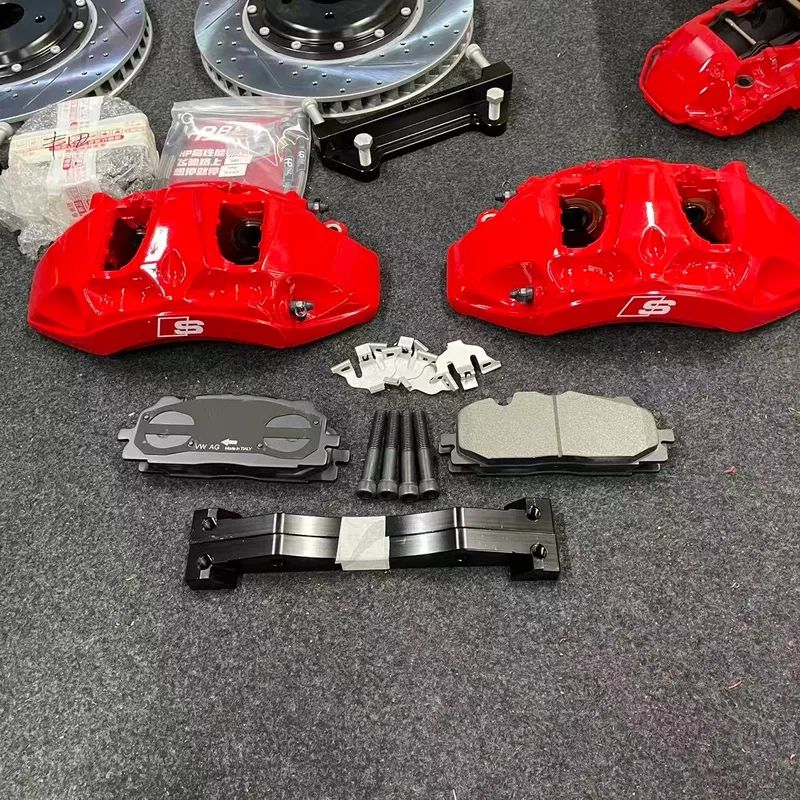
One order covers one front axle: 2 calipers, 2 brackets, 2 rotors, 4 pads and 2 hoses, with the count fixed before the quotation goes out.
| Component | Quantity | Interface still to check |
|---|---|---|
| Calipers | 2 V6 six-piston bodies | Front-axle mounting position and the approved bracket |
| Adapter brackets | 2, machined per vehicle | Bracket offset and rotor centre line for the year and trim supplied |
| Brake rotors | 2 | The chosen diameter against the measured wheel envelope and hub interface |
| Brake pads | 4 | Pad shape and compound against the approved caliper record |
| Brake hoses | 2 | Fitting type, routing across full steering travel and suspension movement |
Installation
The bracket is cut to the van and decides where the body sits, so the order is released only after the vehicle file and the wheel measurements agree. Nothing here suggests the set drops onto a van that has never been measured, and the finished work is checked on the vehicle by a qualified technician.
Ordering the calipers on their own changes the quote: the rotor, bracket, pad and hose interfaces stay on your side of the table. The rear axle is a separate file as well, opened with the parking-brake arrangement confirmed, so a front-and-rear order shows 4 calipers and 4 rotors across two records. Shipping carton and weight sit at 45 x 45 x 45 cm and 45 kg on today’s record, and we recheck both once the rotor diameter is fixed.
Materials, and where the record stops
Three material lines are on file, and they are the whole record:
- Caliper body, hat and adapter bracket: 7050 aluminium alloy.
- Brake rotors: high-carbon cast iron.
- Brake pads: ceramic friction material.
No grade sheet, no test report and no approval file sits behind those lines, so a reseller cannot pass on a material grade, a manufacturing route, a road-legality position or a stopping figure from this page. The live copy also keeps three cells that talk about a brief; those rows are on the correction list rather than in the delivered text.
One more correction matters more than the wording: the live product summary and the structured data describe a Toyota Harrier, not an Alphard. The delivered page, meta description and Schema description all name the vehicle this page is about.
Who buys, and what one set costs
Importers, distributors and workshops
These buyers usually want one set on the bench and a stocking order only after a local van has proved the record. Their file carries the same bracket and rotor data as a retail order, with the destination market and the quantity added, so freight and paperwork travel together.
Shuttle, family and fleet vans
Most of these vehicles work loaded: seven or eight seats, airport runs, hotel transfers and long family trips. The reason for the upgrade is fade and pedal feel with people on board rather than lap times, so the quote is built around the wheel that is already on the van wherever the measurements allow it.
The minimum is 1 set, and a 30% deposit releases it. Allow 3–7 business days for the build and about 20–35 business days for delivery, and settle the balance before the goods leave. The 5 year warranty covers manufacturing and quality defects; wear parts, installation errors and unauthorised changes are excluded. The published ladder steps from USD 448 per set at 1–9 sets to USD 380 at 10–49 and USD 350 at 50–199, and the save notes are worked out from the 448 figure. The 788 figure shown struck through beside the unit price is on the correction list, because it cannot be reconciled with the rest of the block.
Owner questions behind an Alphard order
Which generation does this record cover?
The record is opened from the year and the VIN, because the market sells these kits by code: AH10 for 2002 to 2008, AH20 for 2008 to 2015, AH30 for 2015 to 2023 and AH40 from 2023. The bracket follows the van in front of us, not the name on the tailgate.
Does a hybrid Alphard need a different front kit?
Hybrid versions have been part of the range since 2003, so the trim and the front brakes actually fitted are recorded instead of being assumed from the model name. Two vans of the same year can leave the factory with different front hardware, and the record is written from what is on the vehicle.
Will a factory 18 inch wheel clear the 345 or 355 mm row?
One market kit is pitched at factory 18 inch wheels with no spacers, which shows how much the spoke shape matters on this van. Here, 345 or 355 mm is the 18 inch planning pair, and the wheel still has to be photographed and measured before either is released.
Why is the rear axle a separate file?
Because the rear axle carries the parking brake. Rear kits for the current generation are sold with a dedicated electronic parking-brake component, so the arrangement on the van is confirmed before a rear record is opened and quoted.
Which vehicle and wheel files does the review start from?
The VIN sent privately with the model year, market and trim, the installed front caliper and rotor measurements, the wheel size with original or aftermarket status, ET and J values for aftermarket wheels, and any wheel, spacer or suspension change already fitted.
Which of the two price figures is the live one?
The published ladder is USD 448 per set for 1-9 sets, USD 380 for 10-49 and USD 350 for 50-199, and the save notes are calculated from 448. The struck-through 788 sits on the correction list until the business confirms or deletes it.
The photographs and the first measurement
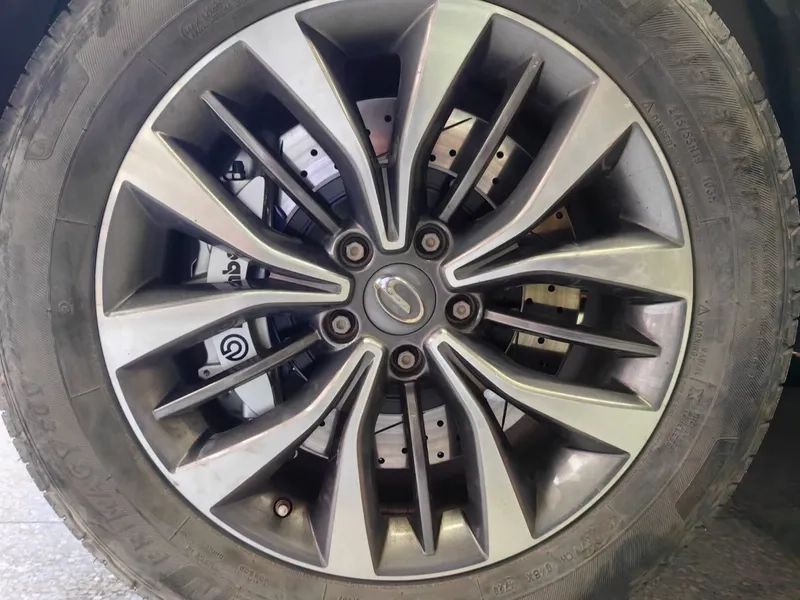
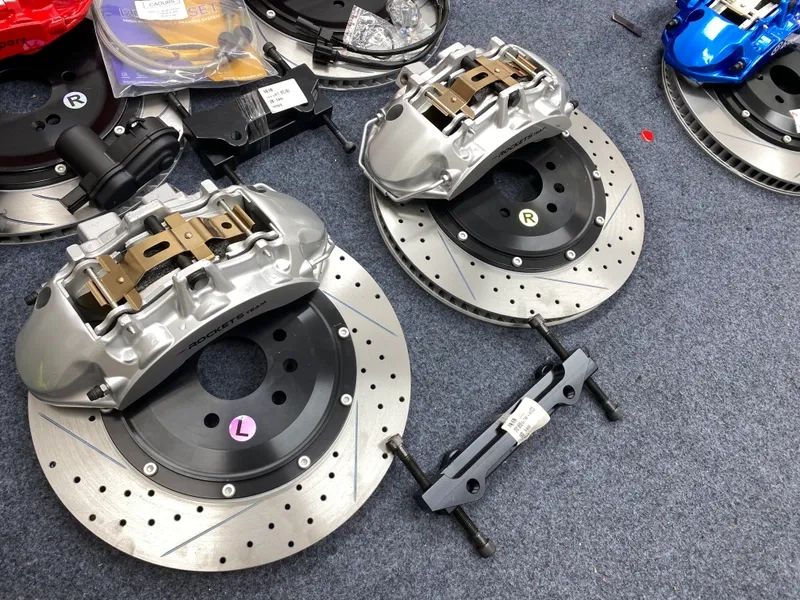
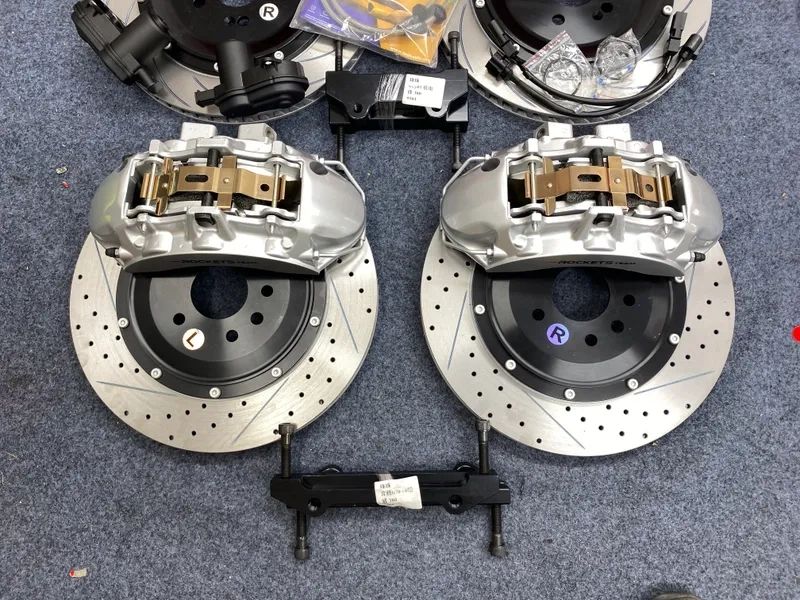
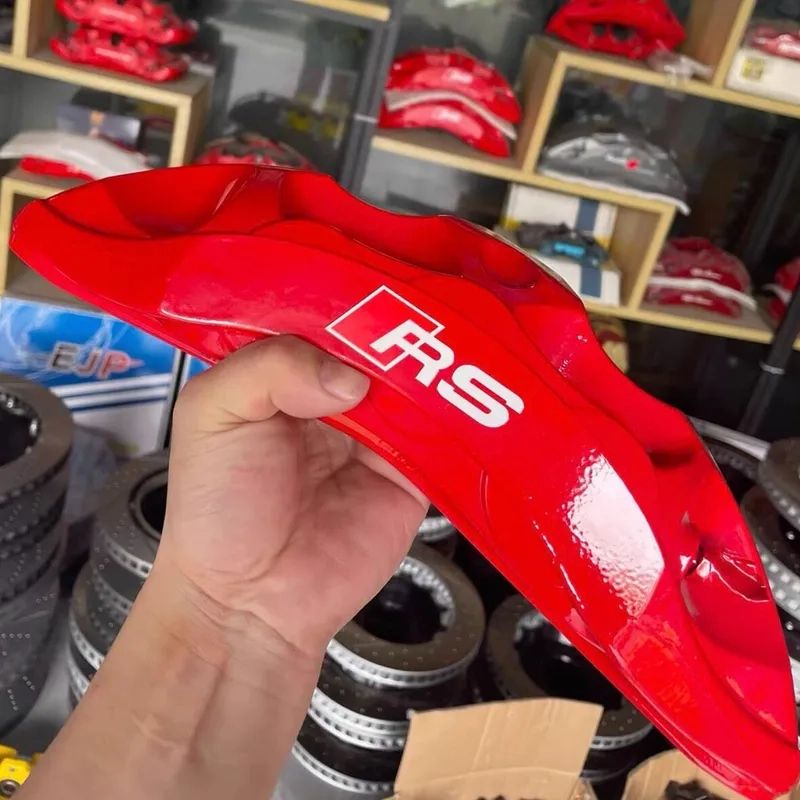
Three photographs sit below: a factory wheel with the brake visible behind the spokes, the pair on their rotors with the brackets laid out, and the same pair from the front. They show a wheel and a kit rather than a finished conversion, so the first measurement is still the one taken on the van.
The file is maintained by our fitment desk and was last reviewed on 2026-09-25. Sources checked: the Alphard model record for the production window, the seating, the hybrid timeline and the generation codes, and the electronic parking brake reference for what that rear component does. The first describes the model history and the second describes the brake type; neither approves a bracket, a rotor row or a wheel for any van.
To open a file, send the VIN privately with the model year, the market and the trim, photographs of the front caliper and the rotor face, the rotor diameter and thickness as measured, the wheel size with original or aftermarket status, ET and J values for aftermarket wheels, and any wheel, spacer or suspension change already fitted, plus the destination country and the quantity. What comes back is the approved bracket and rotor row, the two delivery windows and the price of one set.
Fitment resources before ordering
OE lookup, wheel size, packing, RFQ.
01
Buyer resource
OE lookup center.
Narrow the axle and brake package.
02 Buyer resource Buyer FAQ.Fitment, warranty, packing, quote answers.
03 Buyer resource Browse Big Brake Kits.Compare nearby variants first.
04 Buyer resource Shipping and claim support.Export packing and freight evidence.
05 Buyer resource Terms and claim rules.Approval, payment, shipping and return limits.
06 Buyer resource Request fitment review.Send model, year, VIN and wheel data.
07 Buyer resource Solutions and technical guide.Fitment, installation and packing checks.
08 Buyer resource Buyer application scenarios.Sourcing workflows for international buyers.
09 Buyer resource Wholesale and market support.Market routes and wholesale details.
10 Buyer resource Browse the complete product catalog.Compare related products and variants.
Curated for this product family
Recommended Products
1 / 2
No buyer feedback yet.